Lobster Issue 30 (December 1995) £££
This is a slightly abridged version of part of chapter four of Mark Curtis’s book The Ambiguities of Power: British Foreign Policy since 1945 (Zed Press, 1995) reviewed below. In August 1953 a coup overthrew Iran’s nationalist government of Mohammed Musaddiq and installed the Shah in power. The Shah subsequently used widespread repression and torture … Read more
Lobster Issue 45 (Summer 2003) £££
The American boomerang In America, Mayor Bloomberg has banned smoking in public places, especially in restaurants, inadvertently turning New York into an unlikely but almost spook-free zone. (1) American intelligence officers may not smoke, but some of their overseas contacts will. If meeting in the West, they will prefer to do so in London; or, … Read more
Lobster Issue 35 (Summer 1998) £££
As I write this in late May 1998, the world is watching two Indonesian traditions, locked in a dramatic struggle to determine that country’s future. One, representing one of the world’s most tolerant Muslim cultures, seeks a non-violent return towards the democratic civil society that prevailed in the early 1950s. The other apparently hopes to … Read more
Lobster Issue 34 (Winter 1997) £££
Jane Affleck Here are a few more websites, focusing chiefly on the issue of electronic privacy which is currently being debated both in the U.S. and Europe. Thanks to those who have sent comments, and thanks for contributions to: Terry Hanstock, Ian Tresman and Tony Hollick. Comments and contributions are welcome: I can be contacted … Read more
Lobster Issue 43 (Summer 2002) £££
See Note (1) Introduction In The Wealth of Nations, a book supposed to underpin modern free-market philosophies, Adam Smith thought that the separation of management from ownership would inevitably gave rise to negligence and corruption. The owners of Enron were the shareholders, represented by pension funds, banks and trust funds. The chief managers of Enron … Read more
Lobster Issue 46 (Winter 2003) £££
Do they talk like this? At < www.lewrockwell.com/cummings/cummings29.html > there is a very interesting piece by Richard Cummings about the CIA and publishing; agents and operations are named. At the top of the article is this quote. ‘We are grateful to the Washington Post, the New York Times, Time Magazine, and other great publications whose … Read more
Lobster Issue 42 (Winter 2001/2) £££
From David Hambling On the topic of the People Zapper (Lobster 41 p. 9), the new ‘Active Denial System’ is probably not the first microwave weapon to be deployed. There have been repeated rumours of cruise missiles with HPM (high-powered microwave) warheads being used in former Yugoslavia to knock out communications centres, though apparently the … Read more
Lobster Issue 21 (1991) £££
The Dirty War Martin Dillon, Hutchinson, London, 1990. The SAS in Ireland Raymond Murray, Mercier Press, Cork and Dublin, 1991 Martin Dillon is a freelance journalist in Northern Ireland with a long career behind him: editor and radio presenter for the BBC in Northern Ireland, co-author of the Penguin Special, Political Murder In Northern Ireland … Read more
Lobster Issue 21 (1991) £££
Organisation, History and Politics In the early years of the Thatcher decade, the radical or ‘new’ right was generally treated as though it was a united palace guard for libertarian Conservatism. More recently it has become clearer that the radical right in Britain was, at best, an ‘anti wet’ alliance between authoritarian/ nationalist and libertarian/radical … Read more
Lobster Issue 51 (Summer 2006) £££
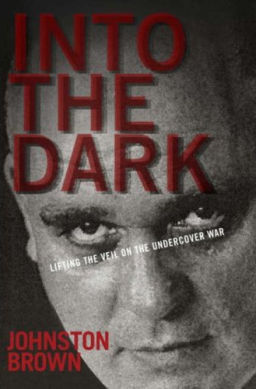
Into the Dark Johnston Brown Dublin: Gill and Macmillan, 2006, £22.99, h/b When Fred Holroyd first made his disclosures regarding the activities of SAS Captain Robert Nairac to Duncan Campbell of The New Statesman in 1984, they were credible because Holroyd was a loyal Army Intelligence Captain with absolutely no sympathies for IRA terrorism. … Read more