Lobster Issue 26 (1993) £££
A Wapping mystery I noticed with some interest that Sunday Times editor, Andrew Neil, was described in the Guardian on May 27 as having been labour correspondent of the Economist in the 1970s. Was he, I thought, one of the correspondents recruited by MI5 in the big F branch expansion circa 1973-5? Did that explain … Read more
Lobster Issue 55 (Summer 2008) £££
The Cecil King coup plot as precursor to Gordon Brown’s ‘government of all the talents’ Students of parapolitics are divided as to the seriousness of the Cecil King coup plot of 1968 to establish what he called a ‘businessman’s government’, a permanent coalition government dominated by the right of the Labour Party but with unelected … Read more
Lobster Issue 53 (Summer 2007) £££
Pinneo and beyond See note (1) ‘The research breaks controversial new ground in scientists’ ability to probe people’s minds and eavesdrop on their thoughts, and raises serious ethical issues over how brain-reading technology may be used in the future.’ So wrote Ian Simple, referring to certain very recent research into the technological inference of human … Read more
Lobster Issue 43 (Summer 2002) £££
Crime fighting? There must many candidates for the title ‘The most damaging thing I have read about this government’. My current candidate is a piece by Simon Jenkins, ‘A Keep Police off the Streets Strategy Unit’ (The Times 2 February 2002). After reminding the reader that in the UK the police are a local service, … Read more
Lobster Issue 57 (Summer 2009) £££
The assassinations of the sixties JFK Farewell America On the site of The Coalition On Political Assassinations(1) is a very interesting essay by William Turner, ‘RFK, Charles de Gaulle and the Farewell America plot’, about the events leading up to the publication of the book Farewell America about the Kennedy assassination.(2) This may be marginalia … Read more
Lobster Issue 55 (Summer 2008) £££
Some of the spook recruitment pitches in the media of the last two years have gone out of their way to impress upon prospective candidates the family-friendly credentials of the major state spook employers.(1) But such measures, no matter how sincere and/or necessary, are for the most part aimed at a parent’s convenience – and … Read more
Lobster Issue 17 (1988) £££
Hess: A Tale of Two Murders Hugh Thomas Hodder and Stoughton, London 1988 This is an update of Thomas’ 1979, The Murder of Rudolf Hess. Thomas argues (a) that the ‘Hess’ in Spandau prison wasn’t Hess at all but a double; and (b) that both the real and false Hess were murdered. The first proposition … Read more
Lobster Issue 41 (Summer 2001) £££
Gecas and Special Branch A wonderful example of the reach and power of intelligence connections was provided in January. Why did the British state refuse to extradite Anton Gecas, the WW2 Lithuanian war criminal, to the Soviet Union in 1976? Turns out not only had Gecas worked for SIS at the end of WW2, he’d … Read more
Lobster Issue 46 (Winter 2003) £££
Miscarriage of justice campaigners say that they are being subjected to serious harassment and intimidation. At a House of Commons meeting, campaigners described their experiences. The meeting, on September 17 2003, was chaired by John McDonnell MP, and included speakers involved with high profile campaigns. Kevin McMahon, of Merseyside Against Injustice, joined the Merseyside Police … Read more
Lobster Issue 51 (Summer 2006) £££
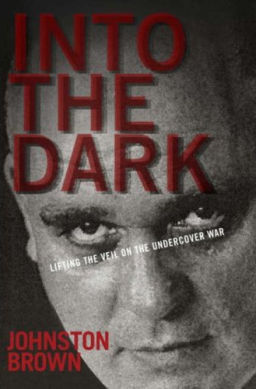
Into the Dark Johnston Brown Dublin: Gill and Macmillan, 2006, £22.99, h/b When Fred Holroyd first made his disclosures regarding the activities of SAS Captain Robert Nairac to Duncan Campbell of The New Statesman in 1984, they were credible because Holroyd was a loyal Army Intelligence Captain with absolutely no sympathies for IRA terrorism. … Read more