Introduction The ‘Gable memo’ reproduced below originally appeared as the subject matter of a long and extremely interesting article, ‘Destabilising the “decent people”‘ by Nick Anning, Duncan Campbell and Bruce Page in the New Statesman on February 15, 1980. This is still worth digging out, particularly for its detailed account of the context in which … Read more
Here are a few more web sites that may be of interest. Thanks for contributions to David Guyatt, Terry Hanstock, Daniel Brandt, Chris Atton and Tony Hollick. Further contributions and comments are welcome: my e-mail is Politics and government USA DoE Office of Human Radiation Experiments http://www.ohre.doe.gov/ ‘OHRE, established in March 1994, leads the … Read more
For some time, the world’s secret services have been making use of loose structures parallel to the official clandestine hierarchies for their more controversial activities. Fred Holroyd’s revelations have shown how the British state employed Loyalist paramilitaries for kidnap and assassination operations in Eire, whilst the Irangate hearings have exposed what is, so far, the … Read more
The Brittle Society Alarmists, like Naomi Wolf, have been exaggerating the degree to which the US, and by implication the UK, have been slipping towards a police state. The evidence for true tyranny in either country is weak. However, since it came to power in 1997, it might be reasonably argued(1) that New Labour has … Read more
The Economic League Labour Research (April 1988) have produced a written version of the essential content of the two World in Action programmes on it, with current personnel and the names of some 350 British companies which have funded the EL since 1972. In line with the thesis suggested by White in his essay (see … Read more
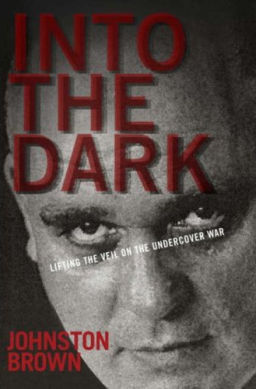
Into the Dark Johnston Brown Dublin: Gill and Macmillan, 2006, £22.99, h/b When Fred Holroyd first made his disclosures regarding the activities of SAS Captain Robert Nairac to Duncan Campbell of The New Statesman in 1984, they were credible because Holroyd was a loyal Army Intelligence Captain with absolutely no sympathies for IRA terrorism. … Read more
Crime fighting? There must many candidates for the title ‘The most damaging thing I have read about this government’. My current candidate is a piece by Simon Jenkins, ‘A Keep Police off the Streets Strategy Unit’ (The Times 2 February 2002). After reminding the reader that in the UK the police are a local service, … Read more
We understand that Lord Rothschild was badly shaken last year by the many innuendoes linking him to the Cambridge spy ring of the 1930s. A typical example was Anthony Glees’ book on ‘British intelligence and Communist Subversion’: “Rothschild (was) remarkably intimate with people subsequently proven to be secret Communists, and Blunt was a major Communist … Read more
The Angolan hostages episode, and more … Although Unita’s capture of 16 Britons at Kafuno diamond mine in Angola received massive publicity, the intriguing titbits thrown up by the reporting were not pursued. In particular, there was the article by Stephen Glover (Daily Telegraph 16th May 1984) in which he stated that he had been … Read more
See note(1) By some standards, the loss of 269 souls aboard Korean Air Lines flight 007 on August 31, 1983, was a modest disaster. The Titanic, for example, claimed 1503 lives; the Lusitania 1198. But historians may come to believe that the political implications of the downing of the civilian 747 airliner by a Soviet … Read more
Accessibility Toolbar
We use cookies. Your use of this site we will assume your consent.