Lobster Issue 41 (Summer 2001)
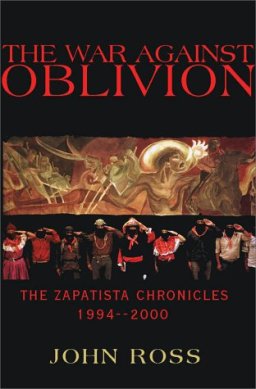
John Ross Common Courage Press Monroe, Maine, 2000, $15.95 (pb) (www.commoncouragepress.com) John Ross is the foremost chronicler, in English, of modern Mexican history. He is particularly knowledgeable about the Zapatista movement and its revolutionary forerunners. In addition to the very good The Annexation of Mexico – from the Aztecs to the IMF, about said country’s … Read more
Lobster Issue 30 (December 1995)
Mark Curtis Zed Books, 1995, £14.95/£39.95 The opening lines of Curtis’ introduction are: ‘In attempting to understand Britain’s role in the world, two approaches are possible. In the first, one can rely on the mainstream information system, consisting primarily of media and academia, where commentators are presumed to provide analyses of current independent of the … Read more
Lobster Issue 35 (Summer 1998)
John Pilger Vintage Books, London,1998, £8.99 pb As one of the few serious radicals in this country to whom the mass media pay any attention, Pilger is important. This is a collection of essays, a few already published but most written for this book. We are back in what is recognisably Pilgerland: the corruptions of … Read more
Lobster Issue 49 (Summer 2005)
[…] the 1960s, the key issues in Northern Ireland were as they remain class issues. This particularly applied to the issue of housing: the Lower Shan kill, in particular, experienced some of the worst housing in Europe. Contemporaneous editions of The People’s Press, edited by Billy Hull, (later of the Loyalist Association of […]
Lobster Issue 41 (Summer 2001)
See note (1) Robin Ramsay The topic was suggested to me by Kevin O’Brien [of ICSA]. It wasn’t clear to me if it was simply that I was being played out a very long piece of rope with which to hang myself. At any rate, given such a wide title – and a title to … Read more
Lobster Issue 53 (Summer 2007)
We know that torture is going on in secret and not so secret prisons. We know thanks to the excellent research done by <www.cageprisoners.com> that elements of the British government, be they MI5, MI6 or diplomats from the FCO, have been involved. Yet we seem unable to stop it. Civic society raises its voices in … Read more
Lobster Issue 45 (Summer 2003)
[…] this genre appeared in the run-up to the Iraq war: ‘The army is training the American military to identify British troops so that they do not inadvertently kill them in “friendly fire” incidents in Iraq. Army sources said Britain believed its troops could be in danger because America’s identification methods were “sub-standard”… “They have […]
Lobster Issue 56 (Winter 2008/9)
[…] his elbow that he was unable to use it for any task requiring a modicum of strength. ‘ would have had to have been a contortionist to kill himself the way they claim…’(20) At the toss of a COIN The publication of a new counterinsurgency (COIN) doctrine manual in 2006 (21) was seen by […]