Lobster Issue 25 (1993) £££
Introduction From 1935 until the outbreak of the Second World War Winston Churchill was a determined and vociferous opponent of the British government’s policy of appeasing Hitler. In the popular imagination Churchill’s prominence at the head of the anti-appeasement movement has become a picture of the prophet crying in the wilderness. A fantasy encouraged by … Read more
Lobster Issue 41 (Summer 2001) £££
Gecas and Special Branch A wonderful example of the reach and power of intelligence connections was provided in January. Why did the British state refuse to extradite Anton Gecas, the WW2 Lithuanian war criminal, to the Soviet Union in 1976? Turns out not only had Gecas worked for SIS at the end of WW2, he’d … Read more
Lobster Issue 28 (December 1994) £££
Lobster Issue 60 (Winter 2010)
FREE
Lobster Issue 70 (Winter 2015)
FREE
Lobster Issue 9 (1985) £££
Part One A to B See also: Part 2: British Spooks “Who’s Who” (Lobster 10) Intelligence Personnel Named in ‘Inside Intelligence’ (Lobster 15) Philby naming names (Lobster 16) First supplement to A Who’s Who of the British Secret State (Lobster 19) Spooks (Lobster 22) Georg Simmel said ‘The purpose of secrecy is above all protection. … Read more
Lobster Issue 46 (Winter 2003) £££
Yesterday’s loony tunes become today’s reality. Here are some recent examples. Gulf war syndrome, whose existence has been denied by the Ministry of Defence for over a decade, is now being admitted. As the Telegraph’s version of the story put it: ‘Soldiers sent to the 1991 Gulf war were given a combination of vaccines that … Read more
Lobster Issue 31 (June 1996) £££
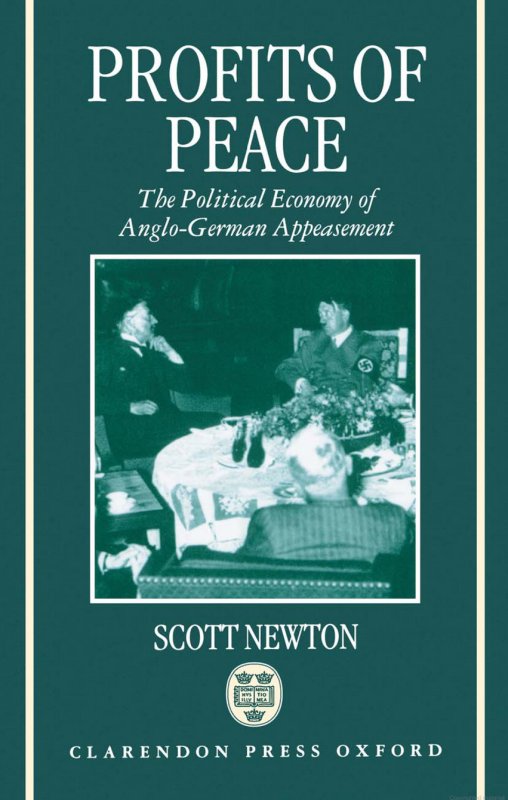
Scott Newton, Clarendon Press, Oxford, 1996, £30 This is the book Newton was working on which produced the spin-off pieces published in Lobster: ‘The economic background to appeasement and the search for Anglo-German detente before and during WW2’ in Lobster 20, and ‘The Who’s Who of Appeasement’ in Lobster 22. As those essays showed, Newton … Read more
Lobster Issue 8 (1985) £££
“The anomaly of going to war in your own country was not lost on Harry.” (Harry’s Game, Gerald Seymour, Fontana, London 1975) Airey Neave was killed in March 1979 by a bomb planted beneath his car just outside the Houses of Parliament. The then little known Irish National Liberation Army (INLA) soon claimed responsibility. The … Read more