
 UNITED STATES DEPARTMENT OF JUSTICE
FEDERAL BUREAU OF INVESTIGATION
Seattle, Washington
April 25, 1972 Re: Harold Adrian Russell Philby, Also Known As “Kim” Philby
The Wednesday, October 13, 1971, edition of “Kodumaa,” Number 41, (677), contained on page 3 an interview with KIM PHILBY.
“Kodumaa” (Homeland) is published in Estonian by the Soviet Committee for Cultural Relations With Compatriots Abroad. “Kodumaa” is published in Tallinn, Estonia.
The Soviet Committee For Cultural Relations With Compatriots Abroad is a Soviet propaganda organization founded in East Berlin, Germany, in 1955; and since that time has been edited by various Soviet officials. The Committee publishes a magazine entitled “Homeland” and a newspaper entitled “Voice of the Homeland” in Russian, Latvian, Estonian, Ukrainian, Georgian and other related languages. Such publications, which are mailed to numerous persons having a family origin in countries now under Soviet domination, attempt…
* * *
This document contains neither recommendations nor conclusions of the FBI. It is the property of the FBI and is loaned to your agency; It and its contents are not to be distributed outside your agency.
This translation of that article was made by the FBI. The double translation, from Philby’s English into Estonian (or Russian), then back into English again may explain the curiously stilted quality of this and the occasional grammatical error.
Question We know that you are one of the greatest specialists concerning matters connected with British espionage and undermining activities and so-called psychological warfare. What can you tell our readers concerning the anti-Soviet campaign in England?
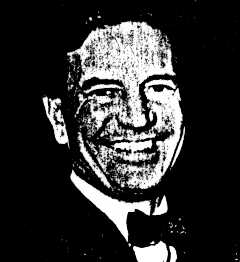
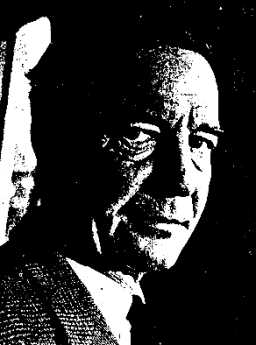
Kim Philby In the 1940s I had the opportunity to become well acquainted with the most protected and, therefore, the most dangerous operations of the BIS. (British Intelligence Service). I have to say that the mania to fabricate libellous statements against the Soviet Union is nothing new in leading circles of the British Government. Such propaganda campaigns always serve to hide current political purposes. So, at this particular time, the anti-Soviet provocations by the ruling Conservative powers, and especially the false mass of accusations concerning Soviet officials residing in London, as well as the choice of time to expand this propaganda, exposes the pre-planned characteristics of this campaign.
These steps have been planned for the purpose of sabotaging the process of a loosening of tension in Europe. It was not by chance that an open dissatisfaction, I would even say fear, appears in the foremost circles among English leaders. This found corresponding echoes in British publications concerning the foreign political activities of the Soviet Union which are, in reality, aimed at healing the breaches in international relations.
Fearing political isolation, the Conservative government would like to expand their anti-Soviet propaganda and espionage campaign into other European countries. A direct invitation to that is being issued by BIS agents through publications and by the radio corporation BBC.
My attention in this case was caught by an article published in the London newspaper Financial Times where on one hand conclusions are drawn concerning the activities of the English conservatives, but on the other hand some of their political aims are exposed. May I quote an excerpt from this article: “England’s action may undermine the prospects of a European Security Conference and may deter talks concerning balanced armament limitations.” Could that be the basis of long-range plans of English-American leaders concerning the NATO aggressive bloc?
Question We ask that you present some facts about the BIS’s undermining activities during the past few years and if possible, evaluate them.
K.P. In my opinion, the BIS can be considered the basic force behind this psychological warfare. It is well known the British Conservative leader Winston Churchill announced his views concerning the cold war in a speech given in Fulton, Missouri, in 1946, but the British SIS did not end its subversive activities with the Soviet Union even during the war with Hitler’s Germany. After the destruction of Fascist Germany Great Britain’s espionage was aimed at undermining the Socialist states.
At the end of the 1940s and in the beginning of the 1950s, England Powers-to-Be established special departments to plan and co-ordinate this activity. So, in 1953 an addition was made to the British Minister’s cabinet – The Committee to Fight Against Communism. This committee included the higher echelons of the united staff leaders of the Intelligence Service, Ministry of Defence and Ministry of Foreign Affairs.
The first Director of this committee was the notorious Glaswin Jabb (sic – Gladwin Jebb) whose name was also adopted for the committee. ‘Jabbs Committee’ was later replaced by the Psychological Warfare Consultations Committee, or the Dodds-Parker Committee, which was given the name of one of my long time acquaintances from the Spanish Civil War.
These organisations carried on their psychological operations against any peace movements, even though on the Government level. They planned Intelligence Service operations against progressive organizations in England, as well as against democratic and other organizations in England and other countries. Special hatred was generated to damage and prevent the unity of friendly Socialist states.
I know that the BIS did much to prevent the preparation and completion of the Austrian Governmental Agreement. But at that time this was one of the basic problems standing in the way of reducing tensions in Europe. When, after the visit of the Austrian Delegation to Moscow, led by the then Austrian Chancellor Julius Raabe, the prerequisites for the Governmental Agreement were made public, BIS did everything possible to discredit Raabe.
During the 1950s the BIS created a very secret department which was named Special Political Actions (SPA). The range of problems presented to the SPA was very broad. I’d like to give an excerpt from an Intelligence Service Directive. It concerns Higher Directive Number C(I02)56. In this the contents of the actions pertaining to foreign policies were explained as follows: “…political undertakings are not an especially successful combination of words because it is very difficult to find a proper name for these many faceted and broad tasks …. In order to determine the nature of these kind of activities such as the organization of overthrow of Government, organization of clandestine radio stations, sabotage and espionage activities, publication of newspapers and magazines, the leading of or causing of failure of international conferences election influence and many others…”
Question Could you, in connection with these documents, give some concrete facts concerning the activities of the BIS?”
K.P. In my opinion, the most disquieting fact, as far as the world and the British commonwealth are concerned, is that the BIS has penetrated the means of English mass news media on a wide scale. Unimpeachable documents concerning the alliance of British Intelligence and the BBC indicate that the respectable BBC is capable at any time of broadcasting the basest disinformation prepared by the Propaganda Section of the SPA. The SPA Propaganda Section maintains constant touch with the BBC concerning any materials prepared by the Special Operations and Materials Service which have any propaganda value at all and which the leaders of the BIS deem necessary to turn over to the BBC for broadcasting purposes. This is how the tasks of this section are explained in one of the documents concerned.
Paid British Agents work in scores with editorial staffs of provincial and London newspapers. These papers include such widely known publications as the Daily Telegraph, The Sunday Times, Daily Mirror, Financial Times, The Observer, and many others.
Scores of names of Agents whom the BIS has co-opted from among journalists and writers are mentioned only in connection with journalism. On each of them the Intelligence Service maintains a file which lists their ‘debits and credits’, their faults and human weaknesses, as well as recommendations when and in what capacity they can be used. It is exactly this category of young journalists, ready to go into action at the demand of the BIS, who now fan the campaign of the cold war started by the Conservative government. I am quite certain that in the final analysis the activities of the British Conservatives and of the Intelligence Services do much harm for the young people.
I would like to mention that in parallel with the SPA, the leaders of BIS also use terror, diversion and sabotage in ‘psychological warfare’.
This question was of special concern to BIS in the 1950s and 1960s and is still one of their activities today.
Directive number N/99639 of BIS demanded the establishment of a net of Agents among their residents in Europe. These groups, whose purpose was to have been conspiracy only, were prepared for carrying out activities of sabotage, diversion and terror in cases of ‘special circumstance’ all in case of worsening relations in those states.
Among others, this directive was sent to BIS residents in Austria, Belgium, Denmark, West Germany, Finland, France, Netherlands, Italy, Norway, Sweden, Greece and Switzerland. Characteristically, this directive includes a special notice which authorized its distribution to the Allied Intelligence Services of Great Britain, including the United States CIA.
Question Could you tell us some of the BIS actions aimed at the Soviet Union?
K.P. I could illustrate your question in conjunction with the tourist problem. In conjunction with the massive tourist movement into the Soviet Union, the Chief of BIS signed a Special Directive in the 1960s authorizing the use of tourists to collect espionage information and to activate political and ideological diversions against the Soviet Union. The Directive emphasised collecting information concerning installations closed to diplomatic circles, especially in the forbidden areas of the Baltic State, Western Ukraine, and in the Urals. BIS was especially interested in the Siberian cities close to Siberian railway systems and in the connecting railroad stations of the northern district, Leningrad and Odessa. The operation to use tourists was coded under the name ‘Polygon’. The most valued espionage activities were incorporated into the tasks of the tourists. Very special attention was paid by the BIS to the handling of Soviet citizens with whom the tourists could develop good relations.
A special Directive concerning these objectives was sent to many English residents in various countries where the Soviet Intourist representatives then became the objects of SIS activities.
Question It is known that several circles in England are very concerned about the ‘New Eastern Politics’ of West Germany. Any comments on this? What part do BIS Special Services play in connection with this?
K.P. During the post war period England had a fairly good agency in the Bonn government. Not only did BIS agents provide information to London concerning the Gehlen Espionage (BND), West German Foreign Ministry and other Departments of State, it also influenced some of the Bonn leading representatives among the Christian Democrats to a certain extent. The victory of the Social Democratic Regime curtailed these operations. One can see that the BIS still maintains connections with ultra-right elements of the Christian Democratic leaders and carry out secret operations to weaken the position of the current government and to compromise some of its leaders.
The work of the BIS is aimed in the direction of depicting policies of Willy Brandt in the eyes of the Western States, especially the United States, England and France, as pro-Soviet Union, which is supposed to be against the best interests of the Western Nations and of the German people. Therefore, it is in no way remarkable to find a parallel between the memoirs of the former West German BND chief Gehlen and the current actions of the English Intelligence Service and government. I recall now that my good friend Peter Lunn, English espionage resident in Beirut from 1962-68, told a whole row of English espionage operators and Agents and contacts in BND and other of West Germany’s State Departments. Lunn, who rose to a leading position in the BIS in the fifties, worked as a BIS resident in Bonn during the years of 1957-61. Lunn told me that the anti-Brandt material published in West German magazines during the fifties and sixties was inspired by BIS.
Question We know that you worked for some time in the Near East, including Lebanon. We would like to hear about the British espionage undermining activities in that area, which through the fault of the imperialistic states has become a cause of tension during a number of years.
K.P. Yes, I did work for quite a while in the Near East states. Even now I am interested in this area. The British Espionage and Intelligence Center located in Beirut is active practically against all Arabian states. After Peter Lunn, the leader of English espionage there was Womerthly (sic), and currently it is Derbyshire who works in the disguise of a secretary in the British Embassy. In the Embassy and in other English representative organizations the following have worked as Agents:
McKnot (sic), Roderick Clube (He was recently expelled from Baghdad because of espionage activities), Randel (sic), Clifford, Vitol (sic), Howard, Newman, Temple, Rowly (sic), Noel-Clark (sic), Steel (sic), Chalmers and others.
Presently such BIS representatives as Witbread (sic), Golty (sic), Speadding (sic) are working there; people who hidden themselves behind various diplomatic positions. Lebanon’s British Embassy’s First Secretaries Sindal (sic) and Joy are also currently active on behalf of the British espionage system.
Reliable sources report that it was in Beirut that the SPA service group for the BIS was organized, that is the service who deals with falsifications and provocations and if necessary with terror …….
Beginning in 1959 BIS in Lebanon organized, through its Agents, several armed groups for acts of terror against unwanted activists in Lebanon. BIS established direct contact with the ultra rightest party leaders and in the early sixties prepared the overthrow of the lawful government of Lebanon and helped strengthen the military dictatorship.
Scores of names of Lebanon’s citizens whom the BIS has engaged in espionage activities speak of the widespread activities of the English espionage system in Lebanon…….The British espionage system is also carrying out undermining activities in other Arabian states. Special activities by the Great Britain espionage system are present in Amman where the BIS resident is British First Secretary Spierce (sic), and in Aden where the BIS resident is the British Embassy First Secretary Brekhony (sic) who exchanged the known English spy K. Harden.
Question Could you say a few words concerning the so-called psychological operations of BIS in the Near East?
K.P. Such operations have poisoned the atmosphere of the Near East for decades and are organized by the BIS in practically all states. For example, the BIS residents prepared and distributed two anti-government brochures in Iraq in 1966. The BIS residency in Baghdad received much help from the BIS in Beirut where the skilled master of such operations, Peter Lunn, with the help of BIS agent D.Kujamdzan, gave the final touch to the brochures and printed them on Arabian presses, procured through third parties, in the BIS headquarters.
BIS also used one of its other agents, formerly Iraq’s oil chief Abdulla Ismal, for undermining activities. Presently, BIS is activating a whole series of undermining activities in Egypt and Syria.
Using its position in Syrian emigration circles and the closeness of the former Syrian politician Salehh Dzeddi, the BIS has during recent months alone published over fifteen “Al-Samar”. The editorial staff of all of these contains BIS paid Agents who are in the English espionage Near East ‘psychological warfare’ operations.
Finally I would like to add that the main purpose of this work in this area, headed by the BIS, is the organization and carrying through of psychological operations under the banner of anti-Sovietism. As far as the British espionage activities as a whole are concerned, I would like to emphasize that in many states the major part of an embassy personnel consists of special service workers. In some states, the British delegates are professional employees of the BIS.
And one more peculiar remark. In my youth and during my later years, I invariably saw the inner pretence and cleverness of the British Conservatives who in their blind rage against the Soviet Union, are not for the first time, working against the best interests of the English people. That is why I am now in Moscow.
Brief Biographies of those Named in the Above
Stephen Dorril
See also:
- Part 1: Forty Years of Legal Thuggery (Lobster 9)
- Part 2: British Spooks “Who’s Who” (Lobster 10)
- Intelligence Personnel Named in ‘Inside Intelligence’ (Lobster 15)
- First supplement to A Who’s Who of the British Secret State (Lobster 19)
- Spooks (Lobster 22)
GOULTY, Alan Fletcher
- Born 2/7/47
- 1968 3rd Sec. F.C.O.
- 1969 MECAS
- 1971 3rd, later 2nd Sec. Beirut
- 1972 Khartoum
- 1975 2nd, later 1st Secretary F.C.O.
- 1977 on loan to Cabinet Office
- 1981 1st.Sec. Washington
HOWARD, George Sigmund Alexander
- Born 2/1/11 London University
- 1940 H.M. forces
- 1946 F.O.
- 1953 British Middle East Office
- 1955 2nd Sec. Beirut
- 1956 1st Sec. Amman
- 1957 Political Adviser to the Air Officer Commanding, Aden
- 1959 F.O.
- 1960 Seconded to the CRO for service in office of UK representative in Cyprus
- 1964 Berne
- 1968- 1st Sec. F.C.O.
JOY, Peter
- Born 16/1/26
- New College Oxford Travellers
- OBE 1969
- 1944-47 RAF
- 1952 F.O.
- 1959 1st Sec. Ankara
- 1962 lst Sec. (Info) New Delhi
- 1965 F.O.
- 1968 1st Sec. (Info) Beirut
- 1973 F.C.O.
- 1975-77 Assistant IRD
- 1979 Counsellor Kuala Lumpur
- 1980 Counsellor FCO (involved in Bitov episode)
LUNN, Peter Northcote
- Born 15/11/14
- OBE 1951
- CMG 1957
- 1940 Royal Artillery
- 1947 F.O.
- 1948 2nd Sec. Vienna (Operation Silver)
- 1950 2nd Sec. Berne
- 1954 Chief of Station, West Berlin (Operation Gold)
- 1956 F.O.
- 1957 1st Sec.Bonn
- 1962 1st.Sec. Beirut – Chief of Station
- 1968 1st Sec. F.C.O.
- 1972 Retired (wrote official – secret – history of MI6)
MCNAUGHT, Eustace Arthur
- Born 18/2/22
- 1942-47 H.M.forces
- 1948 Control Commission, Germany
- 1953 F.O.
- 1956 2nd Sec. Tripoli
- 1959 F.O.
- 1962 1st.Sec. Beirut
- 1967 F.O.
- 1968 Baghdad
- 1970 1st Sec. F.C.O.
NEWMAN, Prudence Anne
- Born 27/3/33
- 1952 F.O. grade 5
- 1956 Vienna
- 1959 Panama
- 1961 F.O.
- 1964 1st Sec. Algiers
- 1965 Diplomatic Service Administration
- 1967 2nd Sec. and Vice-consul Beirut
- 1969 Resigned
NOEL-CLARKE, Michael Richard Fulke
- Born 28/2/40
- 1964 F.O.
- 1965 3rd, later 2nd Sec. Paris
- 1967 F.O.
- 1968 Beirut
- 1970 2nd Sec. Tehran
- 1974 F.C.O.
- 1977 Cairo
- 1981 1st Sec. F.C.O.
RANDALL, Martin Francis Sebastian
- Born 26/9/25
- Magdalen College, Oxford
- 1939-45 H.M.forces
- 1952 F.O.
- 1954 3rd Sec. Beirut
- 1956 Mexico City
- 1958 F.O.
- 1959 Vice-consul Dusseldorf
- 1961 F.O.
- 1964 1st Sec. Baghdad
- 1967 Amman 1969-78 1st Sec. F.C.O.
ROWLEY, Frederick Alan
- Born 27/7/22
- MC (1945)
- OBE (1959)
- CMG (1978)
- 1939 H.M. forces
- 1948 F.O.
- 1949 Vice-consul Addis Ababa
- 1950 F.O.
- 1953 2nd Sec. Rangoon
- 1955 Office of the Commissioner General – Singapore
- 1957 F.O.
- 1958 JSSC course
- 1960 Seconded to Australian Dept. of Defence – Melbourne
- 1963 F.O.
- 1965 ‘Resigned’ for unknown project
- 1967 ‘Rejoined’ Counsellor (Foreign Affairs) Kuala Lumpur
- 1971 F.C.O.
- 1972 Under Sec. F.C.O. – seconded to N. Ireland Office. Director and Co-ordinator of Intelligence N.I.
- 1973 Counsellor F.C.O. – Divisional Head, MI6
- 1976 Deputy Chief MI6
- 1979 Retired
SINDALL, Adrian John
- Born 1937
- 1956 F.O. Grade 5
- 1958 MECAS
- 1960 Baghdad
- 1962 Rabat
- 1965 2nd Sec.F.O.
- 1968 1st Sec. F.C.O.
- 1970 Beirut
- 1972 1st Sec. and Head of Chancery, Lima
- 1976 F.C.O.
- 1979 Counsellor Amman
- 1982 Head of South American Dept., F.C.O.
SPEARES, John Alan
- Born 11/7/19
- OBE (1971)
- 1952 F.O.
- 1956 1st Sec., Baghdad
- 1958 Ankara
- 1962 F.O.
- 1966 Khartoum
- 1969 1st Sec. Amman
SPEDDING, David Rowland
- Born 7/3/43
- OBE (1980)
- CVO (1984)
- 1967 3rd Sec. F.O.
- 1968 MECAS
- 1969 2nd Sec. Beirut
- 1970 2nd Sec. Beirut
- 1972 2nd Sec. Santiago
- 1974 1st Sec. F.C.O.
- 1978 Abu Dhabi
- 1981 F.C.O.
- 1983 Counsellor, Amman
STEELE, Frank Fenwick
- Born 11/2/23
- Emmanuel College, Cambridge
- OBE (1969) 1943-47
- H.M. forces
- 1951 Vice-consul Basra
- 1953 Middle East office, Cairo; 3rd Sec. Tripoli
- 1956 F.O.
- 1958 2nd Sec. Beirut
- 1961 1st Sec. F.O.
- 1965 Amman
- 1968 Nairobi
- 1971 Deputy to Howard Smith, Northern Ireland.
- 1973 Counsellor, F.C.O.
- 1975 Retired Adviser to Kleinwort Benson
TEMPLE, Reginald Robert
- Born 12/2/22
- Peterhouse College, Cambridge
- 1940-46 H.M.Forces
- 1947 Stockbroking
- 1951 F.O.
- 1952 Office of Commissioner General for S.E. Asia, Singapore
- 1956 F.O.
- 1958 2nd. Sec. Beirut
- 1962 F.O.
- 1964 1st Sec. Algiers
- 1966 F.C.O.
- 1967 1st Sec. Paris
- 1969 1st Sec., later counsellor, F.C.O.
- 1979 retired (Head of Oman Research Department – MI6 Middle East Office)
WHITEBREAD, David Harry
- Born 18/4/38
- MBE (1977)
- 1962-63 Kuwait
- 1964-67 Baghdad
- 1968-69 F.O.
- 1970 Beirut
- 1976 F.C.O.
- 1980 2nd Sec. Jedda
- 1983 F.C.O.
WHITTAL, Michael Charlton
- Born 9/1/26
- Trinity College, Cambridge
- OBE (1963)
- CMG (1980)
- 1948 RAF
- 1949 F.O. Salonika
- 1952 British Middle East Office
- 1953 Vice-consul Basra
- 1955 F.O.
- 1956 2nd Sec. Beirut
- 1958 F.O.
- 1959 1st Sec. Amman
- 1963 F.O.
- 1973 counsellor F.C.O.
- 1985 Retired
WOMERSLEY, Dennis Keith
- Born 21/3/20
- Caius College, Cambridge
- 1940 H.M. forces
- 1946 F.O. 3rd, later 2nd Sec. Damascus
- 1948 F.O.
- 1952 Control Commission, Germany
- 1955 Vienna
- 1957 Hong Kong
- 1960 F.O.
- 1962 1st Sec. Baghdad
- 1963 F.O.
- 1966 Aden
- 1967 Beirut
- 1969 F.C.O.
- 1971 Counsellor Bonn
- 1974 Counsellor F.C.O.
- 1977 Retired
BREHONY is in Lobster 9; CHALMERS, CLIFFORD, CLUBE, DARBYSHIRE are in Lobster 10.