Lobster Issue 37 (Summer 1999) £££
JFK: The two Oswalds Anthony Frewin Those of you who missed the two articles by John Armstrong on ‘the two Oswalds’ in recent issues of Probe magazine, don’t despair: Armstrong has rewritten and considerably enlarged them as a two volume DTP work. Armstrong’s finding may be the most significant research breakthrough in years. But we’re … Read more
Lobster Issue 49 (Summer 2005) £££
It is still possible to find an interesting Penguin Special that appeared in 1958. British Economic Policy Since the War, by Andrew Shonfield, then Economics Editor of The Observer, remains a striking piece of work. Among his conclusions were: that the maintenance of a separate Sterling Area, giving the comforting feeling and appearance of great … Read more
Lobster Issue 31 (June 1996) £££
Here is a selection of sites on the Internet that may interest Lobsterreaders. The usenet newsgroups are for discussion of issues and anyone can contribute; some of the contributions are pretty far-out, or just plain abusive, and much of the material is US-oriented. The content of newsgroups is continually changing, and the examples I have … Read more
Lobster Issue 39 (Summer 2000) £££
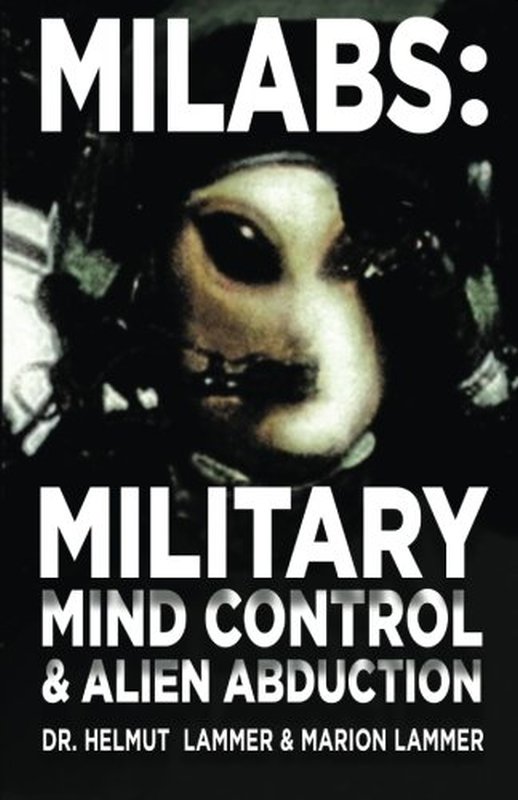
Dr Helmut Lammer and Marion Lammer Lilburn, GA (USA); IllumiNet Press, 1999, $14.95 (www.illuminetpress.com) The alien abduction phenomenon is the most interesting and baffling thing on the contemporary alternative agenda. I have no idea what is going on; I have no idea if the hundreds (thousands?) of people who now report being abducted are … Read more
Lobster Issue 6 (1984) £££
The journal, The Round Table, originally the public face of the secret Round Table network, has reappeared after folding in the late 1970s. It’s new editorial board includes MPs Donald Anderson, Guy Barnett, Robert Jackson, Robert Rhodes-James, and Cabinet Minister Timothy Raison. Other well-known names about London’s elite circles involved are D.C. Watt and Alexander … Read more
Lobster Issue 6 (1984) £££
The conspiracy trail is littered with unresolved leads, but few can be more important than Lee Harvey Oswald’s visit to Mexico shortly before the assassination of President John F. Kennedy. What was the purpose of Oswald’s visit to Mexico City? Was it Oswald or an impostor who visited the Cuban and Soviet embassies? And what … Read more
Lobster Issue 41 (Summer 2001) £££
Mandy’s place in things On 12 June 1999 The News, Portugal’s weekly English-language paper, ran this comment on the Bilderberg meeting which had then just taken place in Portugal. The 47th Bilderberg Conference has come to an end. Members and one-off participants have departed as discreetly as they arrived. Lines of black limousines, unmarked except … Read more
Lobster Issue 46 (Winter 2003) £££
Bilderberg Originally given as a paper at the British Association for American Studies 2002 Annual Postgraduate Conference, this draws on newly available archival evidence to document the origins of the Bilderberg Group. It also considers the various conspiracy theories which have attached themselves to the Group. Is it a CIA plot to undermine socialism or … Read more
Lobster Issue 28 (December 1994) £££
Turning up the Heat: MI5 after the Cold War Larry O’Hara Phoenix Press, London, 1994, £6 (p and p included) from BM Box 4769, London WC1N 3XX; cheques payable to Larry O’Hara. Since 1945 MI5 has had three main domestic targets: Soviet bloc espionage, the British Left and the IRA. With the Soviet target gone, … Read more
Lobster Issue 31 (June 1996) £££
At the end of World War II, hundreds of thousands of non-German workers, mostly from the Soviet Union and other Eastern European countries, were stranded in Germany, while many thousands more were fleeing from areas overrun by Soviet forces. Most of these workers were anti-communist, anti-Soviet and anti-Russian; some had voluntarily collaborated with the Nazis, … Read more