Lobster Issue 54 (Winter 2007/8)
[…] war between globalization and democracy Thom Burnett and Alex Games New York: The Disinformation Company, 2007, p/b, $13.95 Who’s Watching You? The chilling truth about the state, surveillance and personal freedom Mick Farren and John Gibb New York: The Disinformation Company, 2007, p/b, $13.95 Two more from the Disinfo people. At first glance […]
Lobster Issue 37 (Summer 1999)
[…] do this is uncertain – the matter remains classified. Satellite imagery is only the most remote possibility, given the darkness and the low-priority of Guyana as a surveillance site. Radio intercepts are a second, more likely, possibility; at present, however, it is unknown if there were transmissions from Jonestown that would have permitted an […]
Lobster Issue 28 (December 1994)
[…] time I stumbled across a three-page document issued by the South African intelligence service, in which my name was mentioned as a target to be kept under surveillance. On January 18, 1990, in the course of a letter of complaint to Mr P.R. Killen, the South African Ambassador to the UK, I asked for […]
Lobster Issue 57 (Summer 2009)
[…] is now directed at targets in the UK.’(11) Top of the form One of the by-products of the ‘War on Terror’ has been the increased used of surveillance in British schools to help identify potential suicide bombers – dataveillance, as some would term it. According to one observer, ‘the greater detail now requested for […]
Lobster Issue 42 (Winter 2001/2)
[…] on 26 Oct. 2001, greatly expands the ability of law enforcement and intelligence agencies to tap phones, monitor email and internet traffic and conduct other forms of surveillance in pursuit of terrorists. A key feature is its provisons requiring increased sharing of information among law enforcement and national security personnel at all levels of […]
Lobster Issue 41 (Summer 2001)
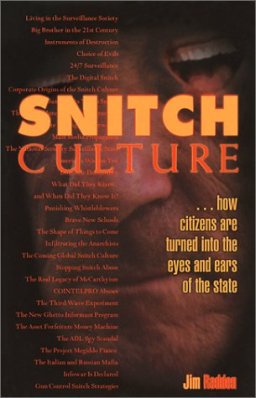
[…] of the lowest form of human behaviour.’ (Redden, p.5) Redden’s Snitch Culture is an enormously detailed and documented account of the history and practice of the state’s surveillance of the domestic population in America. It covers everything from the apparently trivial – campaigns to get kids still in primary school to snitch on their […]