Lobster Issue 50 (Winter 2005/6)
[…] a “back door entry” to the Edward Bennett Williams law firm which is representing the Democratic Party. (4) Mr. Bennett is prepared to go this route to kill off any revelation by Ed Williams of Agency association with the Mullen firm.’ Subsequently, Lukoskie’s boss, Eric Eisenstadt, wrote his own memo, which was hand-delivered to […]
Lobster Issue 42 (Winter 2001/2)
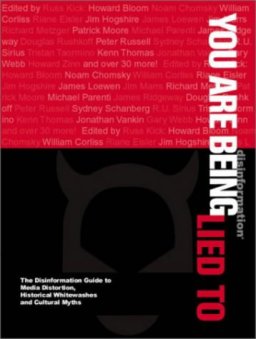
[…] wisdom, it seems, you can say pretty much what you like. Richard Metzger, interviewing someone called Howard Bloom, asks why it is that all Arabs want to kill Jews; Bloom explains that it’s not all Arabs – it’s all Moslems. Clarifying the Northern Irish situation for an American audience, Marni Sullivan declares that ‘the […]
Lobster Issue 30 (December 1995)
In 1976 Mary Ferrell discovered a curious CIA document, a telegram that had been sent from the Agency office in London to headquarters in Langley on 23 November 1963, the day after JFK was assassinated. The telegram reads as follows (blacked-out(1) matter shown by brackets, with suppositions in italic): [Paragraph deleted in its entirety] EXPRESSIONS … Read more
Lobster Issue 50 (Winter 2005/6)
In 2002, in a class action, an American federal jury returned a verdict for the plaintiffs and against a company called Edsaco in a complex securities fraud case. (1) The case was interesting in two respects. Firstly, the plaintiffs’ plea through their lawyers that Edsaco was in fact ‘a front for organised crime’; secondly, the … Read more
Lobster Issue 42 (Winter 2001/2)
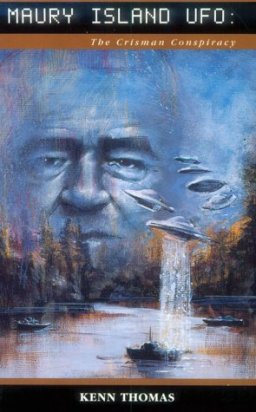
Kenn Thomas Illuminet Press, Lilburn, GA 30048 USA, 1999, $14.95 www.illuminetpress.com The Crisman in the book’s title is a man called Fred Lee Crisman who is one of only two people who were involved at the beginning of the American UFO saga and who appear in the Kennedy assassination story. The other one is … Read more
Lobster Issue 34 (Winter 1997)
Jane Affleck Here are a few more websites, focusing chiefly on the issue of electronic privacy which is currently being debated both in the U.S. and Europe. Thanks to those who have sent comments, and thanks for contributions to: Terry Hanstock, Ian Tresman and Tony Hollick. Comments and contributions are welcome: I can be contacted … Read more
Lobster Issue 46 (Winter 2003)
Advertising In 1960s Iraq, the children of the poor carried their most treasured possessions to school in much coveted, branded soap-powder packets. When these eventually disintegrated, what remained was stuck up on the classroom wall. As a result, children could pick out the words ‘Tide’ or ‘Omo’. Praised by their teacher for doing so, a … Read more
Lobster Issue 39 (Summer 2000)
[…] Observer (5 March), ‘How Gordon has trussed up Tony’, and Joe Murphy and David Cracknell in The Sunday Telegraph (19 March), ‘Mr Brown closes in for the kill’, wrote large pieces describing Gordon Brown’s dominance of the Labour government. Rawnsley’s piece was subheaded, ‘Gordon Brown still burns with ambition to be Prime Minister. I […]
Lobster Issue 50 (Winter 2005/6)
‘Britain, 2005. Saddam Hussein, still the ruler of Iraq and possessor of a long-range nuclear missile, seeks revenge on the west. Warned by intelligence reports of Saddam’s plan, the United States deploys a space-based missile shield, which will catch the Iraqi rocket before it gets to Washington. The key installation is based in Yorkshire — … Read more
Lobster Issue 42 (Winter 2001/2)
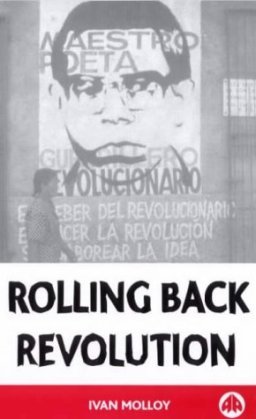
Ivan Molloy London: Pluto Press, 2001, £18.99/£55 In the 1980s the resurgent US military and neo-conservatives were in a bind: faced with a variety of challenges to the American economic empire, the enormous military power they possessed was constrained by PR considerations; American parents who didn’t want their children dying abroad (the so-called ‘Vietnam … Read more