Lobster Issue 46 (Winter 2003) £££
Two pieces here by Tim Pendry. The major piece is followed by an addendum, which began as the text of a letter from Pendry to Dr Sean Gabb of the Libertarian Alliance in response to an article of Gabb’s. Pendry copied me his letter and I saw that it would go nicely with the longer … Read more
Lobster Issue 8 (1985) £££
Part 1 The world of ultra-right conspiracy theory is of interest to researchers into clandestinism for 3 reasons. First, because critics of research into clandestinism frequently attempt to bracket it together with ultra-right believers in The Protocols of Zion and similar fantasies.(1); secondly because the ultra-rightists, in the last decade, have been showing an interest … Read more
Lobster Issue 32 (December 1996) £££
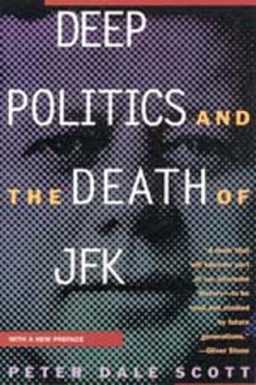
Peter Dale Scott University of California Press (paperback edition, with new preface) 1996, $14.95 ‘The key to understanding Deep Politics is the distinction I propose between traditional conspiracy theory, looking at conscious secret collaborations towards shared ends, and deep political analysis, defined as “the study of all those political practices and arrangements, deliberate or … Read more
Lobster Issue 24 (December 1992) £££
When I began studying the Kennedy assassination, back in 1983, my naivety was considerable. It would be a few years before I fully hooked into the diffuse network of assassination researchers, and my hit-and-miss efforts to locate that fraternity produced some bizarre results during the 1985-87 period. Consulting periodical directories and other sources, I collected … Read more
Lobster Issue 35 (Summer 1998) £££
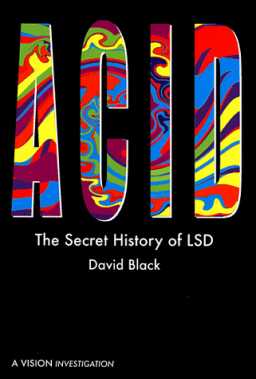
David Black, Vision, London, 1998, £9.99 pb I enjoyed this book hugely, and I’d recommend it to anyone remotely interested in the politics of psychedelia – apart from anything else, there are stories here you almost certainly won’t have heard. However, overall it aspires to more than it can deliver. As the title implies, the … Read more
Lobster Issue 43 (Summer 2002) £££
How MI6 and the CIA were involved in the death of Princess Diana Jon King and John Beveridge New York: SPI Books, 2002, £18.95 In the five years since the Paris car crash that killed Princess Diana, Dodi Fayed, and Henri Paul, interest in Diana herself may have waned, (1) but the circumstances surrounding her … Read more
Lobster Issue 19 (1990) £££
More, please In an account of his career as a writer of spy fiction (Guardian 16 November ’89) John Le Carré referred to the hostile reaction received by his (unnamed) second book, presumably The Looking Glass War: ‘Critics and public alike rejected the novel, but this time the spies were cross. And since the British … Read more
Lobster Issue 32 (December 1996) £££
Operation Julie, a nation-wide police investigation of LSD production, was launched in 1976. Two years later, although some 60 members of the British ‘microdot conspiracy’ had been convicted, Detective Inspector Dick ‘Leapy’ Lee was dissatisfied. The operational commander of ‘Julie’, Lee was interested in the international connections of the network, but was blocked from probing … Read more
Lobster Issue 7 (1985) £££
Policing (a) and the miners 3 page overview in Labour Research (September) Officers being sent straight from training school (Guardian 20 November) Police installing alarms in homes of (some) working miners. (Guardian 27 November) Police officers being charged a ‘fee’ of a bottle of whisky to get on lucrative picket duty. (Daily Telegraph 25 October) … Read more
Lobster Issue 32 (December 1996) £££
Introduction Despite their reputation for ’empiricism’, British academics have tended to treat political power by means of abstract concepts rather than empirical information about the actions of determinate individuals and groups (e.g. Giddens, 1984, 1985; Scott, 1986). After a brief efflorescence of empirical studies of the so-called ‘Establishment’ in the early 1960s, sociologists in Britain … Read more