

Israel, the Jews, and the West: The Fall and Rise of Antisemitism
William D Rubinstein
London: The Social Affairs Unit, 2008, £10.00
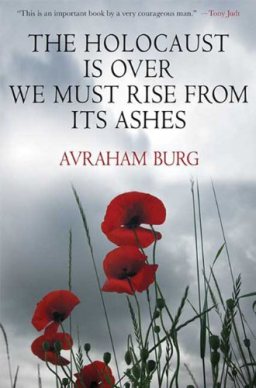
The Holocaust is Over; We Must Rise from its Ashes
Avraham Burg
New York: Palgrave Macmillan, £15.99
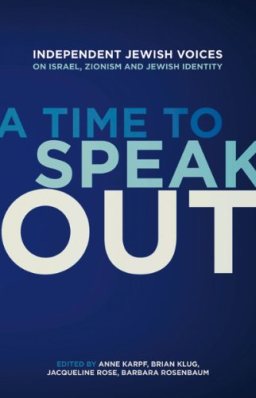
A Time To Speak Out: Independent Jewish Voices on Israel, Zionism and Jewish Identity
Edited by Anne Karpf, Brian Klug, Jacqueline Rose and Barbara Rosenbaum
London: Verso, 2008, £9.99
In times like these we need all the encouragement to hope we can lay our hands on. Two of these three books offer a little of that on the Israel/Palestine conflict, images of which launched 2009 so ominously. One is by Avraham Burg, the former chairman of the Jewish Agency and the World Zionist Organisation, who has also been Speaker of the Knesset. The other, A Time To Speak Out, is a collection of writing on issues facing diaspora Jews, especially on the Middle East strife brought to our TV screens in the weeks between Christmas and the inauguration of Barack Obama.
They are best read after William Rubinstein’s short volume on antisemitism. The American-born historian, now teaching at Aberystwyth university, briefly tracks hostility to Jews from the Middle Ages to the creation of the state of Israel, and then spends the second half of the book on what he sees as two phases of ‘modern anti-Zionism’.
The first phase, extending from 1967 to 1990, he links to the Soviet Union, ‘the chief backer of the Arab world and of terrorism aimed at Israel’, and to the extreme left in the West, many of them Marxists. In Britain that included student groups seeking ‘to ban “Zionist” speakers and even Jewish religious speakers from many university campuses’. This was one of many moves
‘against the background of (and were often prompted by) the infamous UN General Assembly resolution of 1975 declaring that Zionism was a form of racism. Steam-rollered through the UN by the seemingly irresistible Soviet-Arab-Third World bloc of nations, it was repealed only in 1991, following the end of the Soviet Union.’
Rubinstein’s second phase, from 1990 to the present, ‘emanated from an alliance between rejuvenated Islamic fundamentalism and the Western left, as bizarre a political alliance as there has been in the modern world’. He sees ‘today’s Western extreme leftists’ making common cause with Islamic fundamentalism because it is ‘militantly anti-Western’. Added to this is ‘the growth of Islamic numbers throughout Europe and America’, a demographic dimension that ‘sets the present situation apart from that of a generation ago, and makes the situation potentially more ominous and threatening’.
In Britain antipathy to Israel is not confined to radical Muslims and the ‘far left’. Rubinstein says: ‘One of the most egregious and dangerous examples is the BBC’, and he identifies two its reporters, Orla Guerin – ‘little better than an anti-Israeli propagandist’ – and Barbara Plett for particular criticism. John Pilger and former New Statesman editor Peter Wilby are among non-BBC journalists also heavily censored. He anticipates the rise of a ‘Muslim lobby throughout the West, which will, in conjunction with Western leftists, seek to undermine Western support for Israel’. That will flourish with population growth in the Third World, and the ‘mass migration’ of some of these people to the West ‘will inevitably provide a rich compost from which murder-ous barbarous terrorism, as well as all the worst aspects of religious fundamentalism, will grow’.
Rubinstein concludes: ‘The most fundamental point about Israel and its struggle against Islamic-led extremism … that it stands on the cutting edge of a worldwide challenge to the West, and is under attack chiefly for that reason’.
Catastrophic Zionism
Avraham Burg agrees with Rubinstein on one thing: the importance of assessing the significance of Israel. ‘If you wish to understand the world, try to decipher Israel,’ he says, ‘and if you wish to understand Israel, examine the world within which you live.’ But that apart, the views of the former Labour MP, whose father fled Germany in September 1939 and whose Hebron mother survived the Arab massacre 10 years earlier, could scarcely be more different. Burg is a very senior figure in the Israeli and wider Jewish world and so his call for Jews to shed the weight of Holocaust victimhood and its consequent ‘catastrophic Zionism’ is a very powerful one. Entitled ‘Defeating Hitler’ in its original Hebrew edition, Burg’s book is not, as he makes clear from the outset, an invitation to Jews to forget the creators of Third Reich: ‘They are forever guilty in my court. This is our story beyond the evil of their crimes. The Shoah and the atrocities that the Nazis committed against us are an inseparable part of the active Israeli present.’
But the world from which his father fled in 1939
‘has changed in nature and character. World super-powers, most of the Christian churches, and a significant part of world citizenry vowed sixty years ago “never again”, and this time they meant it. We are not facing a great menacing enemy alone. The upheavals of Arab nations, Islamic zealotry and its dangers, directed at us for years while we were on our own, have become the concern of many good nations. Our personal enemy has become the common enemy, and an expansive international coalition stands against it. This is a vastly different world than the one we have known. The world’s stand and our own capabilities provide hope and faith. This is a world that I trust.’
The book is largely cast as a dialogue with his father, a minister in Israeli governments for almost 40 years, in which he relives the history from the idealistic founding of Israel until its painful present.
‘Israel declared itself the heir of the victims, their sole representative in the world, and appointed itself as the speaker of the slain millions. We naturalised six million dead citizens…Israel went beyond mourning; it was no longer a future-oriented state, but a society connected to its bleeding, traumatic past.’
What was true for Israelis, says Burg, also became the identification of many diaspora Jews, particularly after the trial of Adolph Eichmann in 1961, to which he devotes a fascinating chapter, and the Six Day War in 1967. In consequence, he says,
‘when the Jewish lobby in Washington, the Conference of Presidents of Jewish Organisations, and the other Jewish congresses and committees gather, only one issue is discussed: Israel. In the eyes of many Jews and non-Jews alike, the Jewish-American community is a one-issue community. I regret this dangerous erosion of pur-pose very much. I fear a world in which the only Jewish voice speaks only of nationhood and nationalism.’
And not just the Jewish voice.
‘Jewish influence sometimes causes American political candidates to sound like Shoah victims. “Never again” speeches, Auschwitz themes and black skullcaps during memorial ceremonies, complete with “God Full of Mercy” prayers, are frequent. The inevitable outcome of this attitude is a feeling of power, and the further erosion of the Jewish idea of revival that was the basis for American Jewish autonomy. American Jews, like Israelis, are stuck in Auschwitz, raising the Shoah banner high to the sky and exploiting it politically.’
Burg recalls:
‘In one of my early trips to the United States I saw a poster in the offices of AIPAC, the American Israel Political Affairs Committee, that read: “Masada – A Living Memory”. Is collective suicide the contemporary motto of American Jews?’
Independent Jewish Voices (IJV) clearly does not want that to be seen as the watchword of British Jews, and A Time To Speak Out brings together diverse views on many of the issues Burg grapples with and several others besides.
Anne Karpf gives an example of how the experience of victimhood can be used to engender empathy rather than aggressive hostility:
‘When Menachem Begin tried to turn the Arabs into Nazis, some survivors of the Warsaw ghetto and Buchenwald went on strike outside Yad Vashem in protest. One of them made parallels between the way that Israelis vilified Arabs and Nazis vilified Jews, so using the Holocaust as a way not of setting Jew against Palestinian but, on the contrary, of allowing them to identify with one another.’
Calling for an end to ‘grave-robbing and shroud-waving’, she says ‘Judaism traditionally frowns on a morbid attachment to death’.
Jacqueline Rose tackles the charge that Jewish critics of Israeli policy are self-hating, using Hannah Arendt’s response to the same accusation more than 40 years ago:
‘I have never in my life “loved” any people or collective – neither the German people, nor the French, nor the Americans, nor the working class or anything of that sort. I indeed love “only” my friends and the kind of love I know of or believe in is the love of persons.’
Mike Marqusee reminds us of the long Jewish association with progressive politics. He concludes:
‘Much effort has gone into propagating the thesis that the western left today is a hotbed of antisemitism, and that no self-respecting Jew would be part of it. To Jews on the left today, however, that is an unrecognizable picture. The left is not immune to antisemitism or other forms of racism, but the gist of the charge rests on the conflation of Israel with the Jews and of anti-Zionism with anti-semitism: a drastic narrowing of what it is to be Jewish, and of the Jewish historical legacy. Only by abandoning its best historic traditions, its humanist and egalitarian core, could the left satisfy its Zionist critics. And only by compromising their own commitments to universalist principles can Jews today fail to challenge the Jewish establishment’s unquestioning support for Israel.’
Antony Lerman details tensions within that establishment in Britain. He says that some leaders became convinced ‘that Israel needed to be placed at the centre of Jewish concerns, both because Israel was now suffering antisemitic abuse and vilification and because Israel remained the most effective tool in maintaining Jewish identity’.
Richard Silverstein sees the internet as a valuable tool for democratising debate about Jewish identity: ‘blogs may have made the world a little angrier and meaner. But they’ve also enabled us to make a more visceral and immediate impact on the struggle for peace and justice in the Middle East.’
Michael Kustow captures the sadness of many in this IJV collection when he says:
‘A gap has opened up between the values I imbibed from childhood as being Jewish and ethical, and the actions of the Jewish state founded in a burst of exhilaration and relief 60 years ago…. Far from being “a light unto the nations”, Israel, with the help of neo-cons and evangelical Christians in the United States, has turned from a phoenix rising from the ashes to something not far short of a client state in the American imperium.’
What are we to conclude?
All three books alert us to take seriously the concerns of those fearing discrimination. I see this being particularly urgent at a time when the victims of global recession are seeking someone to blame. Alex Brummer, City editor of the Daily Mail, wrote in April of his concern that the mantra ‘Jew Wall Street bankers’ might quickly come to fit that scapegoating bill.
Avraham Burg doesn’t address this issue directly, but clearly sees the potential dangers when he says:
‘Jews hold stunningly powerful positions and clout in the United States. The combination of the American state’s power and the Jewish power in the areas of legislation, administration, media, law, business, culture and entertainment have made the Jews a defining factor of contemporary America. Because Israel is inseparable from the identify of American Jews, Israel is inseparable from the American experience.’
I don’t know where the recession will take American popular opinion, but I find it hard to believe that in Britain there are slumbering reserves of antisemitism about to be ignited by the activities of Goldman Sachs. What seems much more likely, following the Gaza images millions saw over the Christmas and New Year holiday is a growing revulsion at the behaviour of Israel and its allies. In this regard I am more persuaded about ‘new anti-semitism’ by IJV writers than by Rubinstein. One of them, Richard Kuper, citing both both Netanyahu and Ehud Olmert, says that if leading Jewish organisations and individuals
‘cannot clearly distinguish between Jews and Israelis we should not be surprised if others fail the test as well. Thus, we see that the rise and fall of antisemitic attacks in Europe since the collapse of the Camp David talks in 2000 has closely followed the rise and fall of Israel’s conflict with its neighbours…. It is significant that in the heady days of Oslo there was little talk of antisemitism, old or new.’
Burg does not go quite so far, but does say: ‘We must admit that present-day Israel and its ways contribute to the rise in hatred of Jews.’
The extent of current antisemitism is much disputed, including in these titles; but what might well add to it in time may be a reaction to the ‘war on terror’. The overwhelming sense of fear and insecurity Burg sees as crippling Israel’s life and infecting many of its supporters in the diaspora is one that sees enemies virtually everywhere – the direct opposite to what Burg feels when he says ‘this is a world that I trust’, that ‘catastrophic Zionism’ demonises its opponents, heightens our apprehension and provides much of the driving force behind the ‘war on terror’.
Not all the ‘terror entrepreneurs’ – the phrase is Zbigniew Brzezinski’s – we have grown used to in the past 20 years are supporters of Likud’s view of Israel, but many are, as are their funders. (Antony Lerman is informative in A Time To Speak Out on the funding of Bicom and other publicist groups in Britain.) Likud leader Benjamin Netanyahu, central to promoting the ‘war on terror’ from the first Jonathan Institute gathering in 1979 (Lobster 47 et seq), has just been returned to power and now has alongside him the virulently anti-Arab Avigdor Lieberman. For the moment the recession and the election of Barack Obama seem to have punctured the efforts of Netanyahu to use the ‘war on terror’ mindset and network that took us into Iraq into launching a war upon Iran. But if he succeeds in that effort, we will see whether the Community Security Trust and the Board of Deputies of British Jews again report a rise in antisemitism.
I read these books after hearing Sir Gerald Kaufman in the Commons denounce Israeli attacks on Gaza. He described the murder of his Polish grandmother by a German soldier and then said:
‘My grandmother did not die to provide cover for Israeli soldiers murdering Palestinian grandmothers in Gaza. The current Israeli Government ruthlessly and cynically exploits the continuing guilt among gentiles over the slaughter of Jews in the Holocaust as justification for their murder of Palestinians. The implication is that Jewish lives are precious, but the lives of Palestinians do not count.’
His forthright and courageous words in the British Parliament shone out for many – Jew and non-Jew alike. To them should be added those of Avraham Burg on his fellow Israelis:
‘The world is indeed hypocritical, shallow and oppor-tunistic towards us, yet the criticism is justified simply because we are not right. We are not as bad as we are depicted by our critics, but we are not as good as we describe ourselves. The truth suffers because it is surrounded by lies.’