
Most of a talk given at Housman’s bookshop in March.
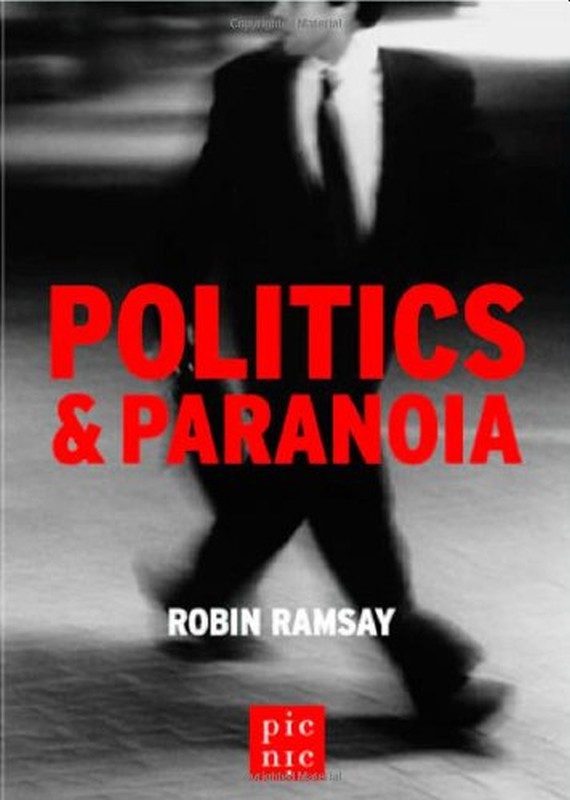
The talks in this book (1) kind of parallel some of the things that I have been writing about elsewhere. I began publishing Lobster in 1983; and I also joined the Labour Party that year, partly, I confess, because it seemed a likely source of stories for a local lefty magazine I was involved in. In the mid 1980s I was one of the few people in the Labour Party who were trying to educate themselves about the role played by the intelligence and security services in our democracy. In 1985/86 I was corresponding with my equivalents in New Zealand and getting material from them on the attempts being made by the United States to overturn New Zealand’s nuclear-free policy. I had read enough about the role of the CIA to recognise some of the names of the people and organisations who were turning up in NZ and the general strategy being employed. It is difficult to remember what life was like before the Internet but in those days this kind of information was hard to find. So there is something on that in here.
For a short time what I had to say on New Zealand and on Harold Wilson’s tribulations at the hands of the spooks resonated with the then resurgent British peace movement. But not for long. My message: that if they were serious they had to educate themselves in the way that I was doing was unpalatable and I was quickly dropped.
Another set of talks here are about Colin Wallace and Fred Holroyd and what they had to tell us about the state’s activities in Northern Ireland and the UK; and related to that are a couple about the wider ‘Wilson plots’. And the basic question which runs through Lobster and this book – how much interference from the secret state, or secret states, has there been? – leads into similar sorts of questions about the New Labour faction which took over the Labour Party: who are they and whom do they represent? (Answer, roughly: they’re professional politicians and they represent the interests of America, the City of London – i.e. American banks – and Israel.)
Yes, the book is mostly the mutterings of what my friend and Lobster contributor Anthony Frewin calls the self-marginaliser. But what are you going to do? If you’re interested in the truth, you’re interested in the truth. You just shouldn’t try and mix this with electoral politics. I managed for a while by concentrating on local politics and keeping the other stuff separate; but it’s unsustainable in the long run. Here is one of the central lessons, and one I wish I’d learned sooner than I did: most politicians are not interested in the truth. They’re interested in anything which damages their opponents and helps their party or individual careers.
I offered the Labour Party pretty decent information that showed some of Mrs Thatcher’s closest allies involved in anti-Labour smear campaigns with the security and intelligence people, and expected them to use it. Of course they didn’t; never gave it a thought, as far as I can tell. But I didn’t know that in the late 1980s, not really. I really hadn’t grasped how politicians see the world. I pursued this subject through the proper procedures and apparently had a success. In 1990 or 91 – I can’t remember which – a resolution of mine on the intelligence services and making them accountable, went from my branch, through North Hull GC, and then through the Labour Party conference, unopposed. Formally that made it official party policy. Did anyone ever mention it again? No, they did not. A year or so later Neil Kinnock lost his second general election, this time to John Major, and the Labour Party leadership began the long and tortuous process of full-scale conversion to being another Tory Party. And we got Blair and Brown after John Smith’s heart attack. And we got an end to the party’s members, via annual conference, having any say at all in policy making. I gave up on the Labour Party in 1992 with the arrival of John Smith as leader and my involvement declined from being branch secretary and local election agent to being just another inactive member, unable to cut the cord. I eventually resigned over Iraq.
A conspiracy theorist?
Much of the content of this book would be described as conspiracy theories by the major media. I would reject that – and echoing at least one of the talks in here on conspiracy theories – I would say that I am not a conspiracy theorist but I am interested in theories about conspiracies. But there are some talks about conspiracy theories, about the phenomenon of conspiracy theories, on which I write a column for Fortean Times. Conspiracy theories are like any other claims about the nature of reality: true or false; held rationally or not.
It was my interest in conspiracy theories which made me briefly of interest to the wider world when The X Files arrived on TV in this country in 1996. The X Files triggered an interest in the paranormal, UFOs – and conspiracy theories, which I had read a bit about since the late 1970s.
In this collection is the text of a talk on conspiracy theories I gave to the Edinburgh Science Festival which was memorable for me (a) because several people I had known thirty years before turned up and (b) a member of the audience claimed in the Q and A session that he had been abducted by aliens. When I asked him to give me details it was all rather vague. But still, I actually got to meet one of the people about whom I had been talking. And, yes, I am interested in the phenomenon of alien abduction. No, I don’t think people are being abducted: but they are having an experience of abduction. And, if I may digress a little here, this is more interesting than it might look; and reasonably well illustrates one of the lessons these fields offers: you just never know what’s going to turn up.
The single most import event in the creation of the story of the US government’s dealing with extraterrestrials, which was the major theme of The X Files, came from what purported to be official US government documents known as the MJ12 papers, which showed this collaboration. The documents and related events are now known to have been a psy-ops project by a branch of US Air Force intelligence. For reasons unexplained the US Air Force fed this alien-government conspiracy stuff to American UFOlogists, some of whom bought it, circulated it. And this material became one of the major themes of The X files, the most successful US TV export in the mid 1990s, going to 66 countries. Given that we know of a great deal of research by the US military into means of influencing the human mind using electronics, microwaves and ultrasound, for example, it thus possible in my view that the experience of being abducted reported by thousands of Americans (and others elsewhere) is not just some collective delusion or psychotic episode but another part of the US military’s psyops programme, perhaps to reinforce the notion of the alien threat contained in the MJ12 documents. And if the US military can induce direct individual synthetic experience electronically and remotely, we may all be in trouble.
A subject nation?
Which in some ways is a long way from the New Zealand peace movement, the subject of the first essay in this collection chrono-logically, and a relatively short step in other ways: for both involve US power. One of the dominant themes in the book is our experience of US power, of being a subject nation to America. Only I didn’t know that when I was writing the talks. You don’t know what you’ve got ’til you see it all written down, perhaps.
In one of these talks, about 9/11, I discuss being anti-American. I am not anti-American but I am anti American foreign policy. I have been since I was in my teens, a very junior member of CND in the sixties, with parents who had been in the British Communist Party after the war. But there’s the paradox: while I was protesting about US bases in Scotland, I was sucking down huge amounts of American cultural propaganda: books, music, films. Aged 16, dressed like Jack Kerouac, I dreamed of playing trumpet like Miles Davis and harmonica like Little Walter.
Who destroyed the Soviet empire? The Americans think it was their economic power in the final years of the arms race. I sometimes think it was probably a man called Willis Conover who introduced the jazz hour on the Voice of America,(2) to which I and millions of others, many behind the Iron Curtain, listened, and were thus introduced to jazz and blues. And how wonderful a place, we thought, must America be if it produced this amazing music?
We are what we are. I was a teenage lefty, hung around in my school holidays with a bunch of beats and anarchists in Edinburgh, discovered jazz and blues and later smoking dope and the underground press – IT and OZ – and never took having a straight career seriously for a second.
We are what we are. I was a premature green, bowled over by the first green wave, Paul Ehrlich and Barry Commoner, for example, in 1970/71, and Ehrlich’s predictions of eco-disaster. Four years later I found out that this country had North Sea oil a-comin’ and I knew there was going to be zero mileage in eco-politics until the oil ran out. And here we are. The oil has about run out and we are more or less where we were in 1978 when oil first starting producing tax income for HM government. Only now we have on this island nearly 7 million more people than we had then and much less manufacturing base with which to employ, house and feed them than we did in 1978. And in response to this I do what? Publish a magazine which no-one reads?
We are what we are. I’ve produced an occasional little magazine now for 25 years, without subsidy. Which is quite a neat trick on a very small scale. Someone was once asked to define a radical magazine and suggested ‘a magazine that doesn’t last very long’ as the best definition. I guess Lobster just isn’t very radical. And politically, neither am I. Not really. I never took that left-revolutionary thing seriously. Partly, no doubt, because of conflict with my old man, who was a serious-minded Stalinist. But partly because I knew the working class. Although I am déclassé essentially, with a working-class father who became a school teacher, I lived among, worked with and went to school with the working class. And they weren’t gonna have a revolution. Nor were the young lefties I knew in the Trot fragments in the 70s and 80s ever likely to lead anything much. At 20 all that stuff struck me as delusory; and still does. This, of course, cut me off from a goodly chunk of the British left. At root I am simply not attracted to great schemes and theories. Some people are. Different strokes for different folks. A lot of this may simply be down to personality types.
About fifteen years ago, maybe more, I got a call from a man in Glasgow who told me he was a fan of Lobster and was thinking of setting up a radical local magazine and did I have any advice. Yes, said I, produce a magazine which you would like to read and buy, which is what I have done with Lobster. And forget the working class: whatever you do they won’t buy your magazine. My Glaswegian caller took offence at that and hung up. But it wasn’t just prejudice on my part. I had tried. Before I began Lobster, me and another bloke in Hull, Colin Challen, now a Labour MP, produced a radical local monthly magazine. I stayed involved for about 20 issues, none of which sold more than 500 copies. At that time, four years into Thatcher, her big recession in full swing, local radical mags were springing up all over Britain. I remember attending a conference in 1984 at which we all got together. But they all went bust, as far as I know. Yes, in Hull we couldn’t get the distribution; and yes, we couldn’t get the advertising; but also: most people simply wouldn’t buy our magazine, or even read it if it was given to them. At the time I didn’t understand why. Now I’m older I do understand: most people simply don’t like politics and aren’t interested in politics. Politics means conflict; and conflict means stress; and most people automatically try to avoid stress if they can. People like us, people who are attracted to politics, to intellectual conflict, are a very small minority. If this depression we are entering turns out to be as severe as some are predicting, and millions are thrown into poverty, maybe the general distaste for politics will be overcome.
But I kind of doubt it.
Politics and Paranoia
Talks, 1986-2004
Robin Ramsay
Picnic Publishing
297 pages, index, £9.99
ISBN 9780955610547
From bookshops and Amazon.co.uk
Notes
- Politics and Paranoia – see display ad at the end of this piece.
- I owe this idea to Anthony Frewin, another avid listener to that jazz hour.