
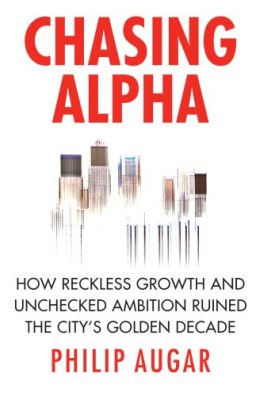
London: The Bodley Head, h/b, 2009, £20Reviewed by
A few days before he became Prime Minister, Gordon Brown was in celebratory mood as he arrived in the Square Mile to address the 2007 Mansion House dinner. Taking much of the credit after 10 years at the helm of the British economy, the Chancellor was in no mood to miss the moment: he delivered a eulogy to globalisation, free markets and the British economy. He paid tribute to Alan Greenspan, the US central banker most closely associated with globalisation, before boasting to his City audience that ‘Government debt in Britain is lower than France, Germany, Italy, America and Japan,’ and that British growth was ‘expected to be stronger this year than last and stronger next year than this’.
As the bankers purred, the son of the manse congratulated them for ‘leadership skills and entrepreneurship’ whose dynamism had led London to innovate some of ‘the most modern instruments of finance’. He went on:
‘The message London’s success sends out to the whole British economy is that we will succeed if like London we think globally…… and nurture the skills of the future, advance with light-touch regulation, a competitive tax environment and flexibility’.
Northern Rock was deep in trouble when the Chancellor uttered these stirring words and we all know what has happened since, a story Philip Augar summarises well given the bewildering pace of subsequent events. But more important than that is the way he recounts the story of the City from Brown’s arrival at No 11.
Like Augar’s earlier books,this draws heavily on his NatWest and Schroders experience. He guides us through hedge funds, asset management, private equity and investment banking, showing how each prospered during Brown’s Treasury years. He demystifies the alphabet soup of complex financial instruments and sheds light on many of the key players – many of them Americans who, he says, had introduced US short-termism to the City – behind the ‘renaissance’ of London as a financial centre.
Brown’s years as Chancellor coincided with that successful ‘perfect calm’. Some of it was nothing more than coincidence, much as London happily enjoys the trading benefits of straddling international time zones. During those years, Augar says, ‘market forces were exceptionally favourable’. But there was also a history that ‘endowed the City with a talent pool and an infrastructure that enabled it to seize the moment’ and a New Labour government that ‘through a mixture of good luck and good judgement, enabled the City to make the most of these opportunities’.
Augar sees Brown’s creation of the Financial Services Authority (FSA) under Howard Davies as key to this City expansion. The Financial Services and Markets Act of 2001, which prescribes the FSA’s remit, ‘reads more like a mandate to protect the UK’s financial services industry than to regulate it,’ says Augar. ‘It is almost as though the FSA was an extended arm of International Financial Services London, the body that existed to promote London as a global financial capital.’
This conflict between Brown’s desire to promote the City internationally and the need to protect British electors from its consequences is central to the book. Augar is an enthusiast for financial services and their earning power, but he also spells out the inherent weaknesses of allowing their unconstrained expansion as they chased Alpha superprofits.
In so doing the author makes plain the failure of Brown and those around him to see beyond the attractive dynamism of the Square Mile. Many of New Labour’s economic advisers were wealthy City people. They brought to government the same blinkered assurance of everlasting economic growth – the end of boom and bust – they had experienced personally in financial careers. They were people who lived in a bubble that insulated them from the rest of the world:
‘Their wealth shielded them from shoddy goods and indifferent service. They rarely had to queue. They could afford small armies of hirelings to help juggle their demanding careers and home lives. Their world was one of good schools, private medicine, domestic help and the best holidays money could buy.’
And the influential New Labour MPs around Tony Blair and Brown ranged from those like Ed Balls, Yvette Cooper and Ruth Kelly whose City knowledge was largely journalistic, to Peter Mandelson, with close friends in lucrative financial PR, who saw his party being ‘intensely relaxed about people getting filthy rich’. In addition, New Labour, afraid of killing what it saw as the golden goose, lived in fear of a financial services sector which Augar sees as ‘quick to play the relocation card, threatening to up sticks and away whenever a policy was discussed that it did not like’.
In a book highly critical of the Americanisation of British-based financial institutions, what Augar doesn’t say explicitly is that New Labour welcomed US leadership on everything from foreign policy to health and welfare ‘reform’. Those New Labourites from Blair down who looked to America for guidance were not likely to object to US methods being adopted in Canary Wharf.
Yet long before the credit crunch, says Augar, there were dissident voices. Labour’s natural supporters, especially in the trade unions, were protesting about the insecurity and inequalities resulting from the growing power of private equity and the tax breaks for non-doms, a group Augar says accounted for half of the increase in City jobs after 1997.
There were criticisms from other quarters. Warren Buffett, the Sage of Omaha, had warned his Berkshire Hathaway shareholders in 2003 that derivatives were ‘financial weapons of mass destruction’. And at that same 2007 Mansion House dinner, the Bank of England Governor, using less dramatic language and coming rather late to the dissenting party, had said:
‘Securitisation is transforming banking from the traditional model in which banks originate and retain credit risk on their balance sheets into a new model in which credit risk is distributed around a much wider range of investors.’
Mervyn King went on:
‘As a result, risks are no longer concentrated in a small number of regulated institutions but are spread across the financial system.’
He expressed concern about assessing the level of leverage in an increasingly complex system before reminding his audience:
‘Excessive leverage is the common theme of many financial crises of the past. Are we really so much cleverer than the financiers of the past?’
Two years later we now know they were not. Nor were those we elected to power, or those we hadn’t elected to advise them, but who nonetheless took their places in the Treasury and the House of Lords.
Augar concludes:
‘For 30 years British governments of the left and right listened far too much to investment bankers and not enough to people in other industries, including other parts of the financial services industry such as accounting, fund management and management consultancy…… The regulators might have done better. The tripartite system was loosely defined; the Governor of the Bank of England might have intervened in markets earlier; the FSA official in charge of super-vising Northern Rock might have paid more attention to the warning signs. But ultimately it was the system that did it; unjustified faith in the power of markets and a mistaken belief that it was wrong for governments to intervene.’
Chasing Alpha tells a story about the British economy under New Labour through the eyes of a former investment banker who sees a strong City as important to the nation’s future. It is a tale well told and one that repays careful reading. But it is not the whole story. That would require a much wider canvas on which an ill-led, hollowed-out Britain is seen to be providing an offshore platform for Wall Street in much the same way as it is an unquestioning, under-resourced ally to Washington in foreign and security policy.
Both roles exact a high domestic price, one that politicians of all parties seem only too willing to make us pay. Whether the current crisis will throw up a more rational, viable economic and political future for the suffering citizens of this scepter’d isle, only time will tell. On present projections, Britain doesn’t have much of that precious commodity left.