
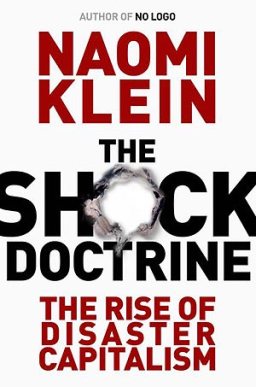
The Shock Doctrine
Naomi Klein, (Penguin 2007)
X Films: true confessions of a radical filmmaker
Alex Cox, London and New York: I. B. Tauris, 2008
Managing Britannia: Culture and Management in Modern Britain
Robert Protherough and John Pick, imprint-academic.com, ISBN 978-097645539
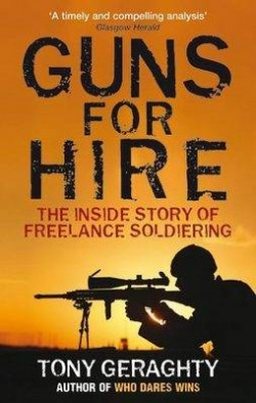
Guns for Hire
Tony Geraghty, Piatkus, 2008
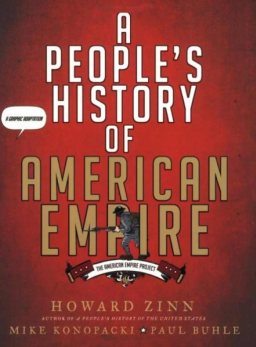
A Peoples History of American Empire: a graphic adaptation
Howard Zinn, Mike Konopacki and Paul Buhle, London: Constable, 2008, £12.99


Naomi Klein’s The Shock Doctrine (Penguin 2007) has been out a while and is as good as the critics said it was. Which is very good indeed. There is a bone I would pick with her. The book is mostly about US foreign policy, and, like many American leftists, Klein perceives its to be a seamless whole from 1945 onwards. But it wasn’t, was it? Douglass’s account of JFK’s foreign policy (reviewed above by Michael Carlson) shows again that JFK was not an identikit cold warrior, supporter of American corporate imperialism. This is strikingly clear not least in US policy towards Latin America. Klein simply omits JFK’s Alliance for Progress. Yes, it achieved little in its short life but symbolically it was of huge significance; and LBJ’s prompt dumping of the policy and the subsequent US support for a wave of repression and coups showed how much it might have mattered.
Does the perception of JFK matter? Compared to global warming, no, of course not. But that isn’t the only item on the agenda. I think it does matter. Because there is another America beyond Dumbfuckistan and the know-nothing culture of its white working-class (and that isn’t going away just because Obama won the election). We need that America and the contest over America’s history is part of the wider struggle. The fact that after the Cuban missile crisis Kruschev and Kennedy were trying to reduce the influence of their military-industrial complexes and both failed (Kruschev’s fall caused by JFK’s death and the change of policies in America) is of great significance. JFK’s American University speech in June 1963 in the midst of the Cold War is very striking.(1) As is the fact that there is hardly anyone on the American liberal-left who understands this or wants to recognise it.
Alex Cox has written for this magazine and though his memoir, X Films: true confessions of a radical filmmaker (London and New York: I. B. Tauris, 2008), is almost entirely about the making of his films, the fact that his politics are radical gives this a quite different feel from other film memoirs which mostly eschew politics. Cox is a political animal and his (left) radical political views run through this. He made his film ‘Walker’ (which I haven’t seen) in Nicaragua while the US-supported contras were attacking the country. But the politics are mostly part of the background and the occasional aside. This is centrally about his becoming a filmmaker and the processes involved in making films, from the ground up: fundraising, casting, location-scouting, script-writing, directing, dealing with actors, editing – the whole intricate bag of tricks, and mostly done on small or tiny budgets. Each of his films gets a chapter and even the chapters on films I haven’t seen were fascinating (sometimes merely at the level of celebrity-watching; I am not immune to the appeal of reading accounts of – say – Ed Harris’s drinking habits) and insightful, both about the changing technology involved and, particularly, about how to work with actors.
Although this is really some way off the main Lobster track, let me bring to your attention the fact that the wonderful, witty assault on managerialism, its malign impact on society and its intellectual pretensions, Managing Britannia: Culture and Management in Modern Britain by Robert Protherough and John Pick, has been reprinted by imprint-academic.com, ISBN 978-097645539
Tony Geraghty has a new book out, Guns for Hire (Piatkus, 2008). About mercenaries? No, sir. His book’s subtitle is ‘The inside story of freelance soldiering’. ‘Freelance’ sounds so much better, doesn’t it? On a quick skim, the book looks pretty good. Although the first half of it reworks familiar material – Congo, Yemen, Angola etc. – there are less familiar sections on Sierra Leone, Croatia, Afghanistan.
I have never enjoyed so-called graphic novels and have even less time for graphic works of non-fiction. A People’s History of American Empire: a graphic adaptation by Howard Zinn, Mike Konopacki and Paul Buhle (London: Constable, 2008, £12.99) does what it says on the tin: on 263 pages slightly smaller than A4 it gives a potted history of Zinn’s view of American imperialism, from what it calls ‘the internal empire’ – the slaughter of the Indians – through to the post 9/11 events, as a series of………well, cartoon strips. Rolling Stone called it ‘One of the sharpest bits of lefty agitprop you’ll ever read.’ Maybe so. But I have even less interest in agitprop (tell me something new, for Christ’s sake!) than I do in stories-in-pictures. So not for me; and, thinking about this, who is this aimed at? The young, unwilling (or unable) to cope with a full-length book?
Notes
- <www.americanrhetoric.com/speeches/jfkamericanuniversityaddress.html> And, yes, it now reads like a suicide note.