
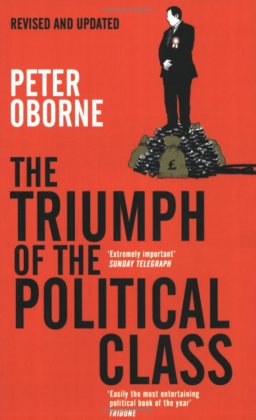
The Triumph of the Political Class
Peter Oborne
London: Simon & Schuster, 2007, £18.99
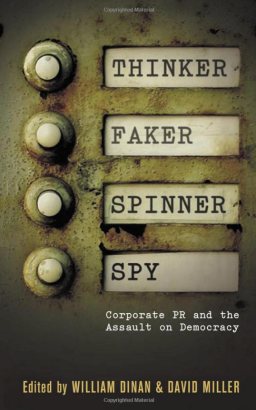
Thinker, Faker, Spinner, Spy: Corporate PR and the Assault on Democracy
Edited by William Dinan and David Miller
London: Pluto, 2007, £15.99
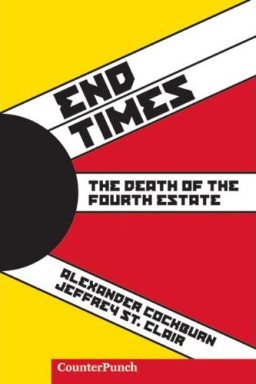
End Times: The Death of the Fourth Estate
Alexander Cockburn and Jeffrey St Clair
CounterPunch and AK Press, Oakland 2007, $15.95
Peter Oborne is a columnist with Associated Newspapers and a former political editor of The Spectator. William Dinan and David Miller are Strathclyde University sociologists who helped found the corporate PR watchdog site Spinwatch. Alexander Cockburn and Jeffrey St Clair have for years edited the US-based political newsletter CounterPunch. So from which of the above, do you reckon, do we get this?
‘I gradually became aware that the conventional narrative structure which is used to give sense and meaning to British politics was extremely misleading. Though the public is told that Tory and Labour are in opposition, that is not really the case. They are led to believe that the Liberal Democrats are an insurgent third party, but that is not the case. It has come to seem to me that their strongest loyalties are to each other.’
Oborne’s denunciation of the way the ‘Political Class’ is ruining his beloved Britain is a compelling read. His detailing of the corruption, venality, nepotism and mendacity of the ‘crony capitalism’ of the past 20 years is in many ways the more telling because he earns his living in the Westminster village. He sees all this close up every day.
We know his views on political spin from earlier writings,(1) but he now extends this to what, in the name of ‘modernisation’, this small but powerful ‘Political Class’ has, through the practice of ‘manipulative populism’, done to a variety of British institutions, including the Civil Service, the Foreign Office, MI6, the legal system, the monarchy and Parliament.
Oborne writes well and his anger-fuelled text carries the reader along at a great lick. One thing that made him particularly hot under the collar was the way MPs at the turn of the century began hounding Elizabeth Filkin, the Parliamentary Commissioner for Standards:
‘Soon a sinister pattern became apparent. When the Commissioner produced a report on a member of the government, her critical comments were – without exception – watered down or rejected. By contrast, the Standards and Privileges Committee actually revelled in reports about rebellious MPs and those who for whatever reason threatened the interests of the main political parties. Far from being rejected, these reports about dissident individuals, or those who could not rely on the protection of the big party machines, were given extra billing and emphasis.’
Why?
‘The real explanation seems to be that all parties have taken the attitude that the Political Class should be exempt from the kind of rigorous examination of their conduct that ordinary members of the public expect to face as they go about their daily lives.’
Oborne doesn’t exempt his media colleagues – many of them part of the same ‘Political Class’ – from scrutiny, and ‘client journalism’ is the telling phrase he uses to describe their activities. This isn’t just the routine matter of lobby correspondents regurgitating government and party spin-doctors as though they were reporting their own independent investigations. Nor even politicos and journos sharing homes.(2) Oborne describes, for example, how when then Daily Express editor Rosie Boycott was looking for a new education correspondent she and the political editor, the late Anthony Bevins, sought ‘the guidance of Stephen Byers, then an ardently Blairite education minister, for advice about who The Daily Express should hire.’
He has an illuminating chapter on media complicity in the Iraq war before reflecting on the growing divide between the hinterland-free ‘Political Class’ and the taxpayers who pay their mortgages. This is not just the gap between the shrinking number of activists who no longer feel any identification with their party, even less have any influence over its direction, but that large part of the electorate who see little meaningful difference between any of them and are looking elsewhere, including at the BNP.
Oborne recounts a visit to the traditional Labour heartland of Dagenham and Barking with local MP and unsuccessful 2007 Labour deputy leader candidate Jon Cruddas.
‘It was plain to me walking thorough Dagenham with Jon Cruddas, that most of the defecting Labour voters were fairly decent people doing the best for their families: community-minded, law-abiding, hard-working, middle-of-the-road. They were victims of the Political Class who had been left with no one to speak up for them, and nowhere to go. Neither the Conservative opposition, nor the New Labour government, is speaking for these people…….This estrangement between a tiny governing elite and mainstream British society is one of the overwhelming themes of our age, and it will get more desperate, and more dangerous.’
The bigger picture
The undermining of democracy is also the theme of the Dinan and Miller collection. None of the authors have Oborne’s intimacy with Westminster but this allows a broader perspective on the politics that so concern him.
The editors set public relations in a global and historical context before Chris Grimshaw spells out the scale of the PR business – in the UK its practitioners greatly outnumbering the country’s journalists. Several contributors illustrate the use of third-party support groups – the industry-funded ‘grass-root’ or ‘Astroturf’ organisations – with Andy Rowell especially informative on the Exxon-backed International Policy Network. And what is the British economy without the weapons business and the City? Eveline Lubbers gives chapter and verse on the undermining of the Campaign Against the Arms Trade and Aeron Davis throws light on the world of financial PR.
Gerald Sussman and William Clark dig deeper than Oborne into the ground from which some of his ‘Political Class’ have sprung. Sussman has a fine chapter on ‘democracy assistance’ programmes in countries of the former Soviet bloc in which the National Endowment for Democracy (NED) features prominently. (I have written elsewhere about its little sister in London, the Westminster Foundation for Democracy.) Sussman writes:
‘With the collapse of the Soviet Union in the 1990s, the American electioneering industry began to operate in a more globalised environment, sustained by state funding and encouragement to establish in the name of ‘freedom’ new bridgeheads for neoliberal economic conquests…… Operating undercover in the [1996] Yeltsin campaign were American consultants George Gorton, Joe Shumate and Richard Dresner, who had previously worked together on Pete Wilson’s California gubernatorial campaign. At a time when Yeltsin had very poor public opinion ratings, the three were asked to use their American razzmatazz to help spin Boris.’
This valuable collection is rounded off nicely by William Clark. His ‘Atlantic Semantic’ piece pulls together important material on New Labour think-tankery. It supplements Oborne’s themes with details of some of the well-funded yet discreet networks driving the transatlantic body politic in the past two decades. It is from them, he recounts, that so many of Oborne’s ‘Political Class’ have been parachuted into safe seats and front-beach positions with little as apprenticeship before sitting in the Cabinet beyond an Ivy League finishing school qualification in neo-liberal orthodoxies.
That little about this influential world gets reported in the daily prints comes as no surprise to Alexander Cockburn and Jeffrey St Clair. In their introduction to pieces drawn from the same period Oborne covers, the pair reflect on what American radicals were doing in the Cold War years: ‘It was thought a good day’s work if you stood outside a US air base handing out leaflets and got maybe 50 service people to take one as they drove in and out.’ They compare that with today when
‘at the end of each month here, at CounterPunch, we can look at the daily breakdown of our three million or so hits, 300,000 page views and 100,000 unique visitors and see that we’ve had some 15,000 regular readers on US military bases around the world. For the time being, the David vs Goliath struggle of the left pamphleteers battling the vast print combines of the news barons has equalled up. On a laptop’s twelve-inch screen we stand as high as Punch Sulzberger, or Rupert Murdoch.’
Neither predicts the demise of newspapers, ‘but it’s a world in decline, and a propaganda system in decline……We can get a news story from a CounterPuncher in Gaza or Ramallah or Oaxaca or Vidharba and have it out to a world audience in a matter of hours.”
This collection happily recounts the embarrassment of the The New York Times over the ‘war on terror’ promoting Judith Miller and of The Washington Post over ‘historian courtier’ Bob Woodward, and it nags away at the malignancy of the Murdoch dynasty. Cockburn himself is particularly severe on Christopher Hitchens:
‘I think he knew long, long ago that this is where he would end up, as a right-wing codger. He used to go on, back in the 1980s, about sodden old wrecks like John Braine, who’d ended up more or less where Hitchens is now, trumpeting away like a Cheltenham colonel in some ancient Punch cartoon. I used to warn my left-wing friends at New Left Review and Verso books in the early 90s who were happy to make money off Hitchens’ books on Mother Teresa and the like that they should watch out, but they didn’t and then kept asking ten years later, What happened?’
While CounterPunch’s editors understandably revel in the diminished influence of newspapers and some big-name journalists, they are not optimistic about the political influence of what they call the ‘Blathershpere’. In a 2006 piece Cockburn says:
‘In political terms the blogosphere is like white noise, insistent and meaningless … (In December 2006, the president of Google disclosed that the average readership of a blog is 1.3 people a day. In other words, the blogger daily and one other person every three days.) …..These people are going to stop a war, change the direction of our politics? They make Barbra Streisand sound like Che Guevara.’
This seems fair to me, but nor should we be totally dismissive. Just like newspaper columnists, some bloggers are better than others, usually because they have specific expertise on a topic; and some websites and associated bloggers target a specific audience with material not readily found elsewhere and in that way genuinely add to the free flow of information.
The big question all three books point to as they reflect on the current political situation is this: how do citizens exercise any control over their environment in a world of unregulated capital flows and multinational commercial imperatives? As I write this the effects of sub-prime lending are showing up beyond the borders of the United States. Seeing political ‘leaders’ bobbing like corks in their wake confirms the urgency of the concerns expressed in all three books. The dangerous desperation Peter Oborne detected is not confined to the alienated electors of Dagenham and Barking.
Notes
- Alastair Campbell (jointly with Simon Walters): Aurum, 2004 and The Rise of Political Lying: Free Press, 2005.
- What, one wonders, does the Foreign Secretary’s senior adviser, Sarah Schaefer, talk about over dinner with Spectator editor – and husband – Matthew D’Ancona? Does the Official Secrets Act still apply when they are feeding the kids?