
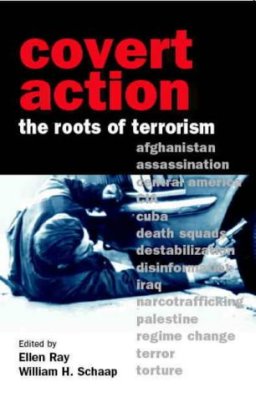
Covert Action: The Roots of Terrorism
Edited by Ellen Ray and William H. Schaap
Melbourne and New York: Ocean Press, 2003, £14.95
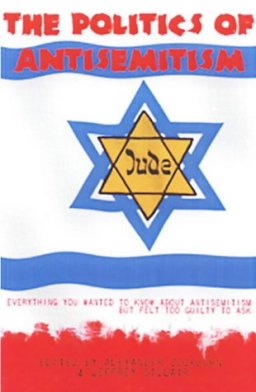
The Politics of Anti-Semitism
Edited by Alexander Cockburn and Jeffrey St Clair
Oakland (US) and Edinburgh: AK Press, 2003, £9.00/$12.95
The Betrayal of Dissent: Beyond Orwell, Hitchens and the New American Century
Scott Lucas
London: Pluto, 2004, £10.99
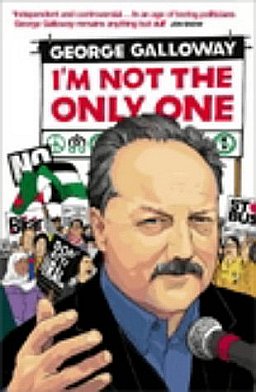
I’m Not The Only One
George Galloway
London: Allen Lane, 2004, £10.00
The collapse of the Soviet Union was widely seen as ending the Cold War and ushering in not just a peace dividend but a world at peace. Writing now after the Madrid bombings of March 2004, the Israeli assassination of two Hamas leaders and witnessing the US/UK treatment meted out to Iraqis, we see the NATO alliance alive, enlarged and active in Asia; the UK Defence Secretary arguing for ever-larger arms and intelligence expenditure in line with the Pentagon’s; talk of the ‘war on terrorism’ is everywhere, with the British Home Secretary squeezing out long-established civil liberties, and prominent Jews warning of rising anti-Semitism. Millions march against the invasion of Iraq, but, with the exception of Spain, have yet to dent the electoral fortunes of the political leaders who took us there. The Cold War kept democracy on a short leash; the war on terrorism threatens to choke it.
Between them these four titles cover this disturbing ground well. The first two, being collections, assemble a wide range of material. The Roots of Terrorism material from Covert Action magazine takes us back into the Cold War Years while the contributors to Cockburn and St Clair concentrate on more recent events. Both draw on intelligence sources and a high proportion – half the Anti-Semitism collection – comes from Jewish writers. Lucas reaches back furthest with his evaluation of George Orwell but also brings us nearest to the present with his critique of the British newspaper columnists who supported the Iraq invasion. George Galloway MP, expelled from the Labour Party after allegations about his closeness to the Saddam Hussein regime in Iraq, brings together elements of the other three in a stinging criticism of Tony Blair and the politics of New Labour.
By way of critical summary and review, I will attempt to outline how New Labour fits into the bigger picture of transition from Cold War to the apparently everlasting war on terrorism. Several figures help us keep hold of the narrative. Three British Parliamentarians – George Robertson (now Lord Robertson of Port Ellen), Gwyneth Dunwoody and Dennis MacShane – link the Labour Party’s involvement in the Cold War and the newer one against terrorism. Blair’s former press chief Alastair Campbell, a long-standing foe of Galloway since Campbell worked for the crooked Mirror owner and former Labour MP, Robert Maxwell, also bridges the two.
In poring over all the dissimulation over weapons of mass destruction, the death of scientist David Kelly and, most recently, who knew what over the torture and murder of Iraqi civilians, it may be useful to bear one fragment of US history in mind. Paul Lindley, the former US Congressman, wrote in his They Dare To Speak Out: People and Institutions Confront the Israeli Lobby (Lawrence Hill & Co 1986):
‘During the Iranian hostage crisis in 1980, columnist Jack Anderson quoted “US intelligence reports”, actually supplied by the Israeli embassy by way of the American Israel Public Affairs Committee, that the PLO had mined the embassy to frustrate any rescue attempt by the United States. The intelligence reports proved to be bogus.’
It will be remembered that the failure of US President Jimmy Carter to rescue the hostages had an important bearing on his defeat by Ronald Reagan and it is on this final decade of the Cold War where the Covert Action collection proves very useful. In their introduction, written just before last year’s US-led Iraq invasion, Ray and Schaap say the ‘the practical economic forces driving this resurgent imperialism – in essence unmitigated greed–are not alone enough to explain current conditions’. US exceptionalism – ‘the notion that Washington is somehow entitled to do what it wants’ – is part of the unilateralist brew. Another element, they say ‘is a form of religious fundamentalism endemic to the United States from its earliest days, the messianic notion the the US represents God’s chosen people, God’s chosen system of government, God’s chosen way of triumphalism.’ But ‘the strongest (and often the only) ally of this new US triumphalism has been the government of the State of Israel. While many of Bush’s key administration figures are indeed self-professed Zionists, many others are deeply fundamentalist Christians.’
After indicating that the collection includes material from those of a Jewish heritage – ‘like Noam Chomsky, the son of a rabbi, and the late Israel Shahak, a Holocaust survivor’ – Ray and Schaap say: ‘Because of the role of Israel as handmaiden to God’s US anointed we have tried throughout to highlight the distinction between anti-Zionism and anti-Semitism. It is a distinction that is deliberately blurred by the media, for obvious reasons.’
The Jonathan Institute
In indicating the influence on US policy of the ‘Israel firsters’ in promoting the ‘war on terrorism’ they describe the critical significance of the Jonathan Institute ‘that first promoted the notion of preemptive and punitive strikes. As this became US doctrine it served as an ex post facto justification for Israeli policies already in place. And it was the Jonathan Institute that provided the framework for the anti-UN sentiment that has consumed Washington.’
The Jonathan Institute was founded in 1976 by Benjamin Netanyahu, in memory of his brother, Jonathan, who was killed leading the Entebbe Raid. Benjamin Netanyahu later become prime minister of Israel after being ambassador to the UN and deputy ambassador to Washington. He called the first international conference of the institute in Jerusalem in 1979 and followed it up with one in Washington DC five years later.
Participating in both and chairing the second was Lord Chalfont, the former Times defence correspondent Alun Gwynne Jones who was a defence minister in the 1964 Wilson government before becoming a fierce Cold War propagandist. Chalfont, a doughty defender of apartheid South Africa, became chairman of the UK wing of the Committee for a Free World (see below) in 1981, the year Reagan assumed the US presidency and a number of his former Labour ministerial colleagues set up the Social Democratic Party (See Lobster 31 et seq).
Attending the Jerusalem conference in 1979 were George Bush (father of George W. with at that time only the CIA directorship on his political CV), his former Langley colleague Ray Cline, Perle, Ledeen, Congressman Jack Kemp, Senator John Danforth and Senator Henry ‘Scoop’ Jackson. The last was a key figure in the US military-industrial complex, often known as the Senator for Boeing. A passionate supporter of Israel and fierce opponent of détente, he was a politician who gave early encouragement to Perle, Ledeen, Frank Gaffney (a member of the Reagan administration and since much used by the BBC), Carl Gershman (see below) and a whole swathe of politicos and propagandists later to be known as Neoconservatives.
Travelling from Britain with Chalfont were Brian Crozier, Robert Moss, former New Statesman editor turned Thatcher cheerleader Paul Johnson and former Labour Home Secretary Merlyn Rees. Quite why Rees should be in this company in Jerusalem is something of a puzzle. Two possible explanations come to mind. One, he had been much involved in the Ulster troubles as Northern Ireland Secretary. Then as Home Secretary, and responsibility for MI5, he had to deal with the IRA mainland bombing campaign. Two, he had a long record of seeking to bring Nazi war criminals to justice and was highly regarded in the Jewish community – strongly represented in his Leeds constituency – in consequence.(1)
In his book on the work of the Jonathan Institute (Terrorism: How the West Can Win, London: Weidenfeld and Nicolson, 1986), Netanyahu says the 1979 Jerusalem conference
‘….exposed for the first time the full involvement of states in international terrorism, and the centrality of the Soviet Union and the PLO in fomenting and spreading it. For example, the former chief of Israeli military intelligence, General Shlomo Gazit, revealed that Arab terrorists participated in 50 different military schools and courses in the Soviet bloc, some 40 in the Soviet Union itself. The conference predicted also the rise of terrorist states, emphasising the importance of the then newly established Islamic republic of Iran.’
‘Many observers,” writes Netanyahu, ‘believed the Jerusalem conference was a turning point in the understanding point in the understanding of international terrorism….But what was still lacking was a coherent and unified international response…To advocate such a unified policy and to suggest what it might consist of was the principal objective of the Jonathan’s Institute’s second international gathering in Washington on June 24-27, 1984.’
Many of the Jerusalem participants were at that second conference, along with Bob Woodward of The Washington Post; Arnaud be Borchgrave of The Washington Times; Ted Koppel of ABC News; Charles Krauthammer of The New Republic; Princeton historian of Islam, Bernard Lewis; Jeanne Kirkpatrick, Reagan’s UN ambassador and leading AEI figure; Claire Sterling, the promoter of the KGB plot to kill the Pope story in the Reader’s Digest and elsewhere, and Norman Podhoretz, the editor of Commentary magazine and his wife, Midge Decter, executive director of the Committee for the Free World.
Both the Covert Action: Roots of Terrorism and The Politics of Anti-Semitism collections describe the activities of many of the Jonathan Institute participants in the 25 years since its first conference. Schaap and Ray look critically at the role of Israel during the Cold War in working with the US government openly and covertly in Africa and Central and Latin America. Ed Herman, Ramsey Clark and Noam Chomsky remind us that while the Soviet Union was blamed for ‘state-sponsored terrorism’, the US was actually way ahead in pioneering that activity. Larry Jones tracks the political dimension of fundamentalist Christianity in the US, showing in 1991 that Iraq was already doubling for the biblical Babylon. He tells us that evangelicals were the first to call for the use of nuclear weapons there ‘because it could be construed as a fulfilment of prophecy and a godly act’.(2)
Fred Landis has important material on Ledeen and the role of several other leading Jonathan Institute figures in Iran-Contra and the ‘public diplomacy’ programme that ran alongside it during the Reagan years. Part of that White House programme, as I have indicated in Lobster 31 et seq, was directed against the British Left in its 1980s campaigning against the siting of Cruise and Pershing missiles in Western Europe. Ledeen was likewise part of the Neocon network that formed the Congressionally-funded National Endowment for Democracy in 1983.(3)
Landis describes Ledeen’s disinformation themes in the few years between the first Jonathan conference and his involvement in Iran-Contra as follows:
‘The notion that the CIA was destroyed under Carter; that there was a KGB mole in the Carter Administration; that the loss of Iran and Nicaragua was the work of the mole; that the Soviet Union is behind the International Terror Network; that it tried to kill the Pope; that the Libyans tried to kill President Reagan; that the Iranians tired to kill President Reagan and that Fidel Castro and Tomas Borge are major narcotics dealers.’
In that same period Ledeen was working closely at the Washington Center for Strategic and International Studies (CSIS) alongside former US labour attaché in London and key Hugh Gaitskell ally Joseph Godson. (Lobster 31 et seq). This is the same Ledeen who has regularly been used used by the BBC over 20 years as ‘a Middle East expert’ and the man to whom Conrad Black gave licence to promote the war on Iraq in The Spectator and the Telegraph titles.
The Schaap and Ray Covert Action collection sets the strategic and historical context for the Cockburn and St Clair material. The latter is almost worth it for just two pieces – the Robert Fisk May 2002 article in The Independent, ‘Why Does John Malkovich Want To Kill Me?’, and one of the last pieces written by the late Edward Said on Palestine. But there are many other useful contributions, of which three particularly help in clarifying our thoughts on where Blair and British politics fits into the picture. Uri Avnery’s ‘Manufacturing Anti-Semites’ is a very powerful attack on the present government of Israel by one of its own citizens.
‘The Sharon government is a giant laboratory for growing the anti-Semitism virus. It exports it to the whole world. Sharon’s propaganda agents are pouring oil on the flames. Accusing all critics of his policy of being anti-Semites, they brand large communities with this mark, Many good people, who feel no hatred at all towards the Jews but who detest the persecution of the Palestinians, are now called anti-Semites. Thus the sting is taken out of this word, giving it something approaching respectability.’
In America, he says ‘the Jewish establishment is practically straining to prove that it controls the country’. Avnery describes how in 2002 US a young black congresswoman, Cynthia McKinney, ‘dared to criticise the Sharon government, support Palestinians and (worst of all) Israeli and Jewish peace groups. The Jewish establishment found a counter-candidate, a practically unknown black woman, injected huge sums into the campaign and defeated Cynthia. All this happened in the open, with fanfares, to make a public example – so that every senator and congressperson would know that criticism Sharon is tantamount to political suicide.’
This theme is taken up by George Sutherland, the pen name of a ‘senior congressional staffer’, in describing what he calls ‘Our Vichy Congress’. He writes: ‘For expressions of sheer grovelling subservience to a foreign power, the pronouncements of Laval and Petain pale in comparison with the rhetorical devotion with which certain congressmen have bathed the Israel of Ariel Sharon.’
After detailing several examples of the way the Israeli lobby operates, including preventing an investigation over the Israeli ‘arts students’ saga, he concludes:
‘Israel’s strategy of using its influence on the American political system to turn the US national security apparatus into its own personal attack dog or Golem has alienated the United States from much of the Third World, has worsened US ties to Europe among rancorous insinuations of anti-Semitism, and makes the United States a hated bully.’
Sutherland quotes the words of EU commissioner Chris Patten in The Washington Post: ‘A senior Democratic senator told a visiting European the other day: “All of us here are members of Likud now.”‘
Neocons in the henhouse
Ex CIA-staffers Kathleen and Bill Christian describe the growing influence of what they call ‘Israelists’ in the US policymaking system. They name the ‘Neocons in the hen-house’, describing them – many currently assembled under the Project for a New American Century – plainly as having split loyalties between the US and Israel. They conclude that under Bush,
‘…the two strains of Jewish and Christian fundamentalism have dovetailed into an agenda for a vast imperial project to restructure the Middle East, all further reinforced by the happy coincidence of great oil resources and a president and a vice-president heavily invested in oil.’
Scott Lucas clearly has an awareness of these forces at work in the US political process. This provides him with an important new standpoint in his evaluation of George Orwell and then of Christopher Hitchens and other contemporary columnists who supported UK backing for the US-led invasion of Iraq. As an American who knows his country’s history and, therefore, Senator Joe McCarthy and the House Unamerican Activities Committee, he recognises the importance of naming names. So for him the passage by the dying Orwell of names to Celia Kirwan of the Information Research Department in those early years of the Cold War has a significance that might be lost on many Britons. Not that blacklisting hasn’t always been a part of British life – the well-funded activities of the Economic League and the MI5 ‘fir trees’ on BBC files come readily to mind – but it has never quite achieved the same political saliency here as in the United States after McCarthyism and HUAC.
This is not the place to rehearse the many arguments over Orwell’s act. But in linking Orwell’s list to that of Hitchens 50 years later in identifying a rogues’ gallery of writers including Noam Chomsky, John Pilger, Howard Zinn and Harold Pinter, Lucas sets up a useful polemical device for pointing to the boundaries of permissible dissent. For what got under Lucas’s skin in the build-up to the Iraq invasion was the way writers, claiming to speak for the Left, promoted the Blair and Bush line. Hitchens was the most prominent of them followed by David Aaronovitch in The Guardian, Nick Cohen and David Rose in The Observer, Stephen Pollard (a former Fabian Society official and adviser to New Labour) in the Express and Times, and Johann Hari in The Independent trotting out similar sentiments. To read some of their words a year after Bush declared ‘mission accomplished’ and with the images of occupying forces torturing Iraqis everywhere, is to be reminded how silly scribblers can be.
This columnist phenomenon troubles me less than it does Lucas. I now simply don’t read them and look to the internet for a broader base of information and argument. I know I am not alone in that. What matters much more to me than even the naming of names by Orwell and Hitchens and possible subsequent shunning in HUAC style, is the positive naming of names. By that I mean the identification of those – some are politicians and journalists – who are part of a largely covert network of influence who unaccountably yank the political strings and lead us into situations like Iraq. Research identifying Bilderbergers, the lucky beneficiaries of US fellowships and scholarships, the funders of political parties and movements, members of the British American Project, politicos who double as City advisers, spooks and lobbyists – these are the people our democracy would be the better for having listed.
This is a relatively small matter with which to take issue for Lucas assembles a whole weight of material about the columnists for conflict and, more important to me, their employers – Murdoch, Black and Richard Desmond are all strong supporters of Israel – which is genuinely useful. He is severe on New Labour by using the same deadly technique he employs on the commentators: he quotes what they say. This from Blair in February 2003 is an example. He invoked a foreign policy ‘robust on defence and committed to global justice. [This idea enables] us to espouse positions that in the past the left had regarded as impossible to reconcile: patriotism and internationalism.’ I wonder if the Prime Minister will be saying that on June 6 to the veterans of D-Day who then voted Labour in such large numbers in 1945?
Lucas also prompts many thoughts along the way. Why, for example, does Gordon Brown spend so much time in the company of Rupert Murdoch’s Neocon American pal Irwin Stelzer? He also is not, as some reviewers have suggested, harsh on the author of Animal Farm, the book the West used to such propaganda effect during the Cold War. He concludes:
‘There is no need to bury Orwell. That was a done more than 50 years ago, in a small country churchyard in Oxfordshire. Instead it is “Orwell” that needs to be given the final rites. Despite the inconsistencies, contradictions and outright pettiness of his character assassinations, Orwell can be admired for the power of his writing, for the tenacity with which he held his changing opinions, and for certain prescriptions for the social and political issues of his time.’
Galloway
If George Orwell was a child of his time – exhaustion by world war, retreat from Empire and opening of the Cold War – George Galloway is the offspring of ours. A Scottish working-class Catholic of Irish descent, he was made aware of the wider world when, in 1975, as a young Labour activist, he met a Palestinian student at Dundee University. Galloway rose rapidly to chair the Scottish Labour Party in his twenties and moved to London to run War on Want, one of the most radical Third World charities, in 1983. Galloway was at that time close to the Kinnocks, with Glenys on the management board of the charity. But that relationship soured during the miners’ strike. Glenys left War on Want to start a new charity and Neil fell more under the influence of Alastair Campbell, the Mirror journalist whose career Robert Maxwell had rescued from alcoholism. Maxwell’s closeness to Israel was at odds with Galloway’s identification with the Palestinian cause (Galloway’s wife is Palestinian). There then grew an animosity between Campbell, later to run Blair’s press operation and coordinate ‘coalition’ propaganda on its wars, and Galloway, who, after being elected a Labour MP in 1987, became increasingly opposed to the direction of the party under Blair and its foreign policy, especially on the Middle East.
The media antipathy to Galloway, initially orchestrated by Maxwell and Campbell in the Mirror, was then taken up by the papers that largely back Israel – those of Murdoch, Desmond and Black. The Mirror strongly opposed the 2003 Iraq War and swung behind Galloway, and it is the Conrad Black paper, The Daily Telegraph, which claimed to find documents in Baghdad linking Galloway directly to payments from the Saddam Hussein regime. Galloway, a successful libel litigant over many years, brings this defamatory allegation to court in November after winning damages over similar claims by the Boston-based Christian Science Monitor last year.
Blair did not wait for the outcome of any legal action, but expelled Galloway from the party after 35 years’ membership. Galloway is now running the Respect unity coalition.
It’s not hard to see why Galloway posed a threat to the New Labour leadership. He is a witty and powerful orator. He is very media savvy with a regular column in The Mail on Sunday and a good friend in Seumas Milne, the Comment editor of The Guardian. He also has some moral authority on the Left. This is not only for opposing Saddam Hussein when the Iraq leader was a friend of the British government, and for raising wider issues about Britain’s role in the world. It is also because unlike Campbell, Peter Mandelson, Helen Liddell and many other New Labour figures, Galloway did not take money from Maxwell other than by successfully fighting him in the libel courts. And as more Britons challenge the postwar consensus of interests of Britain and the US, Galloway is one of the very few MPs with any understanding of the covert workings of the British state and with any view of an alternative direction for British foreign policy.
In I’m Not The Only One Galloway demonstrates his knowledge of the wider world and sheds much light on some of his one-time Labour colleagues in Scottish Labour politics. George Robertson, whose slavish devotion to all things American Galloway ran up against early in his career, is one of them. John Reid, the ex-Communist who is now Blair’s leading studio casuist, is another with whom Galloway has regular done battle, occasionally physically, he tells us. Galloway also goes back a long way with Dennis MacShane, the Foreign Office minister who denounced Hugo Chavez during the short-lived and US-backed coup attempt on the Venezuelan leader. ‘Now I know a lot about Dennis MacShane,’ Galloway writes rather threateningly, ‘including the fact that he is not Dennis MacShane. His is a family of Roman Catholic refugees from Poland who changed their name to blend in more successfully.’ (I shall return to MacShane, who as an international trade union official was involved in the US-funded Solidarity campaign in his father’s native Poland.) (4)
Robin Cook, who resigned as Foreign Secretary over Iraq, does not emerge much better in I’m Not The Only One. Galloway retells this story from the time he and Kinnock were close
‘[Cook] had been Kinnock’s campaign manager for the leadership in 1983, in exchange for which he wanted a top shadow portfolio, preferably defence. Kinnock disappointed him. I was with Kinnock in his Bedwelty constituency the night he did so. I heard him talking to Cook about his disappointment, pouring balm on his wounded ego. When he put the phone down, the leader, who’d been drinking, unleashed an unprintable stream about the “conceited little man” he’s just been schmoozing. And so Cook had begun to tread the path of apostasy…..Cook would go on to be humiliated by Blair. He had been a fanatical propagandist for Blair’s wars, developing an unhealthy relationship along the way with Clinton’s Secretary of State, Mrs Albright, or “Madeleine” as Robin always called her. He would do this even at party meetings, attended by people who would snigger at the pathetic familiarity of it all.’
Galloway has much more to say on New Labour as well as Saddam Hussein, the Bush family, the United States and the prospects for his new political organisation. But a central part of his book – one in my view that it itself justifies the price – addresses the main theme explored here: the salience of ‘the war on terrorism’ and influence of the friends of Israel on the politics of the West. To my knowledge, Galloway is the only prominent figure in British public life to raise these issues so directly and a brief extract gives a flavour of it.
‘The pro-Israel lobby stressed the “Labour” nature of successive Israeli governments, taking pride in the party’s membership of the Socialist International. They did not say that this “socialist” government was dependent on the USA, that is was helping the apartheid regime in South Africa arm itself against its black majority (while many of the heroes of the anti-apartheid struggle were Jewish), and that is was arming and training the death squads of grisly generalissimos from the Philippines to El Salvador. The Zionist leaders have spun the myth that they had seized an unpopulated land for a landless people – one of the fattest lies in history. Their doyenne Golda Meir once actually announced, “There is no such thing as a Palestinian.”‘
Such sentiments plainly did not commend Galloway to a Blair not only in alliance with Bush but, as I shall shortly indicate, influenced by a more discreet Neocon network than all the authors here show working on the politics of the US government.
Labour, America and Israel
It’s time to draw together some strings from these four books and add a few of my own. First, some statements of the obvious.
One, the alliance of Britain and the US forged in the Second World War and the Cold War has outlived both. It is maintained by mutual interests of business, intelligence and global influence and sustained by a swathe of networks through which many in Britain, including politicians and journalists, have built a career.
Two, Israel is a small, vulnerable country and needs friends, especially ones wielding power in the world, to help it survive. We should not be surprised that Israel seeks to maximise its influence in the West through a variety of means, including politics and the media.
Three, there clearly are terrorists in the world, just as during the Cold War there were communists. By the same token, there are those who benefit from exaggerating the influence of terrorists in the world just as we know there were many who became significant in politics and journalism by exaggerating the ambitions and influence of the Soviet Union.
In the postwar world the Labour Party has been influenced by all three factors in ways which we can not only discern, but respond to. What is clear beyond any doubt after the public reaction to the Iraq war and the growing hostility to New Labour on which it is largely based, is the sign of a new awareness of these realities beyond the readership of Lobster.
In helping set up NATO, the Attlee government reaffirmed the wartime bond with the United States and this was reflected through the party and figures from Denis Healey and Anthony Crosland in the 1950s and 1960s to George Robertson and the Labour right/SDP/New Labour grouping since. Various Lobster writers have detailed the way the state apparatus of Britain and the US developed and reinforced that link. My own researches into the British American Project, the former Labour Committee for Transatlantic Understanding (5) and the evidence of a prepon-derance of US-educated people in New Labour is all part of that long pattern. So there should be no particular surprise at one level that Blair and his government should go all the way on Iraq with a Republican White House. His shutting down of internal democracy in the Labour party suits the US now the way Gaitskell’s battle with the Left was encouraged by the US nearly 50 years ago.
The issue of Israel is a little more complicated. From its foundation in 1949 there was a large measure of party-wide support. Tribunite Ian Mikardo was a strong supporter on the Left as was Gaitskell on the Right. The daughter of one of the latter’s supporting party officials, Morgan Phillips, is Gwyneth Dunwoody. Elected to Parliament in 1974, she is life president of the Labour Friends of Israel. She sternly took to task her old colleague in the Parliamentary Labour Party, Tam Dalyell, when he talked last year of the ‘Jewish cabal’ around Blair.(6)
Interestingly when the Labour Party was adopting a more critical view of Israel and the United States in the 1980s, Dunwoody was one of the people Charles Z. Wick, the head of Reagan’s propagandising United States Information Agency, came to London to see.
A pal of Reagan’s from Hollywood days, Wick was a leading figure in the well-financed and aggressive US public diplomacy programme mentioned earlier that was partly directed against the European Left over the siting of a new generation of nuclear missiles. On his London trips between 1981 and 1983 Wick mainly saw senior staff at the BBC and ITN and supporters of the Conservative government and its officials.(7)
At the time Dunwoody was a shadow health minister and ostensibly a very minor player in Labour politics, so a meeting with such an important US figure is a little surprising.
What might make it less so is her Israeli connection. Much of the US public diplomacy programme was run 20 years ago by people we now call Neocons. Part of it was the National Endowment of Democracy (NED) referred to earlier headed by Carl Gershman. He was previously aide to Jeanne Kirkpatrick at the UN; on the staff of the Anti-Defamation League and leader of Social Democrats USA (SDUSA), a Socialist International affiliate composed largely of supporters of ‘Scoop’ Jackson, the Senator who promoted the careers of Perle and Gaffney as part of his commitment to his home state arms industry and to Israel. Ledeen is part of Gershman’s network, as was Joseph Godson, the former US labour attache in London who was close to Gaitskell and the right-wing trade union leadership, particularly Frank Chapple and Eric Hammond of the electricians union.
Gershman’s NED channelled US funding in the 1980s to Godson’s Labour Committee for Transatlantic Understanding, actors’ union Equity and to the Social Democratic and Labour Party in Northern Ireland. It was one of the conduits for US money to Polish Solidarity when MacShane was working with it the 1980s. Twenty years later NED was funding the opposition in Venezuela when MacShane denounced Hugh Chavez during the failed coup attempt. (8)
The Labour Friends of Israel
Dunwoody’s researcher and election agent for some time was David Mencer, a former member of the Israel armed forces, and now secretary of Labour Friends of Israel (LFI). Stephen Byers, one of the few remaining defenders of the New Labour Project, is a senior figure in LFI whose parliamentary chairman is now James Purnell. The latter was elected to Parliament in 2001 after working at No 10.(9)
Purnell, Stephen Twigg, Lorna Fitzsimons, Jim Murphy and Sion Simon (a columnist for Conrad Black’s Daily Telegraph before becoming an MP in 2001) were all members of the New Labour ‘Praetorian guard’. Before becoming MPs they all cut their teeth in student politics with the help of the Union of Jewish Students (UJS). Numerically small – its website said it had 5,000 members in 2001 – it can afford 10 full-time workers. It played an important role in the 1990s in working with the National Organisation of Labour Students (later Labour Students) in keeping Israel off the campaigning agenda of the National Union of Students (NUS).
Of an older generation of student politicians is Mike Gapes who came to work for the Labour Party after the NUS as a foreign policy researcher. He was part of the small team around Neil Kinnock who shifted the party away from its critical stance of the US and unilateralism. Elected to Parliament in 1992 he is now vice-chairman of Labour Friends of Israel. He wears another hat, that of chairman of the Westminster Foundation for Democracy (WFD), a tax-funded operation similar to the NED in the States. (10)
Earlier this year Gapes chaired a WFD gathering at which the Neocon NED chief Carl Gershman was a speaker.
This is just scratching the surface of the old Atlanticist networks with a newer Israel dimension, but it is sufficient to suggest that much of it in Britain centres around New Labour. And just as Avnery describes the pride the Israeli lobby takes in its power over the US political process, so we have a parallel here around Tony Blair.
We not only can piece together the evidence; we can hear the words of one of Blair’s main links to the business community, Jon Mendelsohn. (11)
This is what Mendelsohn told Jewish Weekly on September 8, 2002:
‘Blair has attacked the anti-Israelism that had existed in the Labour Party. Old Labour was cowboys-and-Indians politics, picking underdogs. The milieu has changed. Zionism is pervasive in New Labour. It is automatic that Blair will come to Friends of Israel meetings.’
In a signed 2001 election advertisement in The Jewish Chronicle, Blair said:
‘Since 1997 a record 57 Labour MPs have visited Israel, mostly with Labour Friends of Israel, swelling the numbers of MPs willing to ensure balance on the Middle East in the House of Commons. More Labour MPs have visited Israel than from any other party.’
How many of those Labour MPs voted against the invasion of Iraq? This is now important to the future of British politics.
The two US books points to the bleak reality there that is the democratic process one in which fundamentalists, the Israeli lobby, oil, finance and arms businesses join in their crusade against terrorism to take us to the torture cells of Abu Ghraib. Lucas warns us of the dangers of having the borders of dissent patrolled by figures either from the past or those with no sense of it. Galloway breaks new ground by trying to absorb this growing awareness of the wider world and its resistance to being dragooned into authoritarian ‘anti-terrorism’ and redirect it into a British electoral machine. Interesting books and interesting times.
Notes
1. In a 1998 ceremony held in Parliament, Rees was presented with the Simon Weisenthal Center humanitarian award by Rabbi Abraham Cooper, associate dean of the Simon Weisenthal Center, Los Angeles.
2. Rather chillingly, given all the recent talk of WMDs he writes: ‘A video called “Saddam Hussein, The Persian Gulf and the End Times”, produced in the fall of 1990…predicted chemical and nuclear warfare and the final destruction of Iraq.’
3. I shall return to the role of NED later, but would mention now the important material on it and the CIA in relation to the Vatican and the Cold War by Carl Bernstein in Time magazine 24 February 1992.
4. It will be remembered, in passing, that MacShane was the name chosen by author Chris Mullin for a character with strong US connections in his novel, A Very British Coup. Mullin is now a colleague of MacShane in the Foreign Office.
5. Now TUCETU, as described by David Osler in Lobster 33.
6.’Dalyell to face party censure on “Jewish cabal”‘: Colin Brown, The Sunday Telegraph, 25 May, 2003
7. USIA: Recent Developments. Hearing before the Committee on Foreign Relations United States Senate, 22 September 1983.
8. ‘Cheering on democracy’s overthrow: The putsch against Venezuela’s elected leader failed this time’, Isabel Hilton, The Guardian 16 April 2002
9. Purnell was a former Islington councillor with Stephen Twigg, also a leading figure in LFI.
10. WFD’s first chairman was George Robertson, a Bilderberger, one of the founders of the British American Project and subsequently Blair’s Defence Secretary and Secretary General of NATO.
11. For more on Mendelsohn, New Labour, lobbying and business see Greg Palast, The Best Democracy Money Can Buy (London: Robinson 2002).