
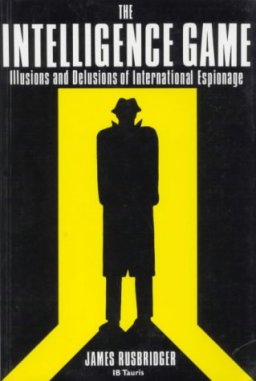
James Rusbridger
I. B. Tauris, London 1991, £8.95
James Rusbridger is Peter Wright’s cousin oddly enough, and occasionally assisted MI6 in the 1950s and 60s, an experience which has left him a cheerful cynic. He canters briskly and amusingly over the field of spook foul-ups in the post-war period to ‘show the pointlessness of so much of the work of the intelligence services everywhere.’ The result is an entertaining but very sharp analysis of that peculiar mixture of ruthless patriotism and utter incompetence which characterises so much of the efforts of the contemporary action men (and women). For by ‘intelligence services’ he really means the covert operations arms of the state.
In Rusbridger’s view one of our spooks’ few successful operations has been their concealment of their futility and venality from the mug tax-payer. Do we still need such organisations? Every so often Rusbridger feels obliged to reassure us that we do. I wonder if he really means that: his correspondence with the British media suggests otherwise. Clearly we need something to keep an eye on putative ‘revolutionaries’ with access to Semtex — but do we need the present organisations? Do we really need MI5, for example? The CIA was originally going to be an open, intelligence-gathering agency. Would American economic interests have been better or worse served since 1948 had the CIA not come to be dominated by the covert operators?
Although topped and tailed with new material, this is otherwise unchanged since the hard-back edition in 1989. The further collapse of the Soviet empire since then has made a page or two now sound rather odd, but this remains the most purely enjoyable and subversive single volume on the world’s secret servants.
RR