
23.
Book Review. The Round Table
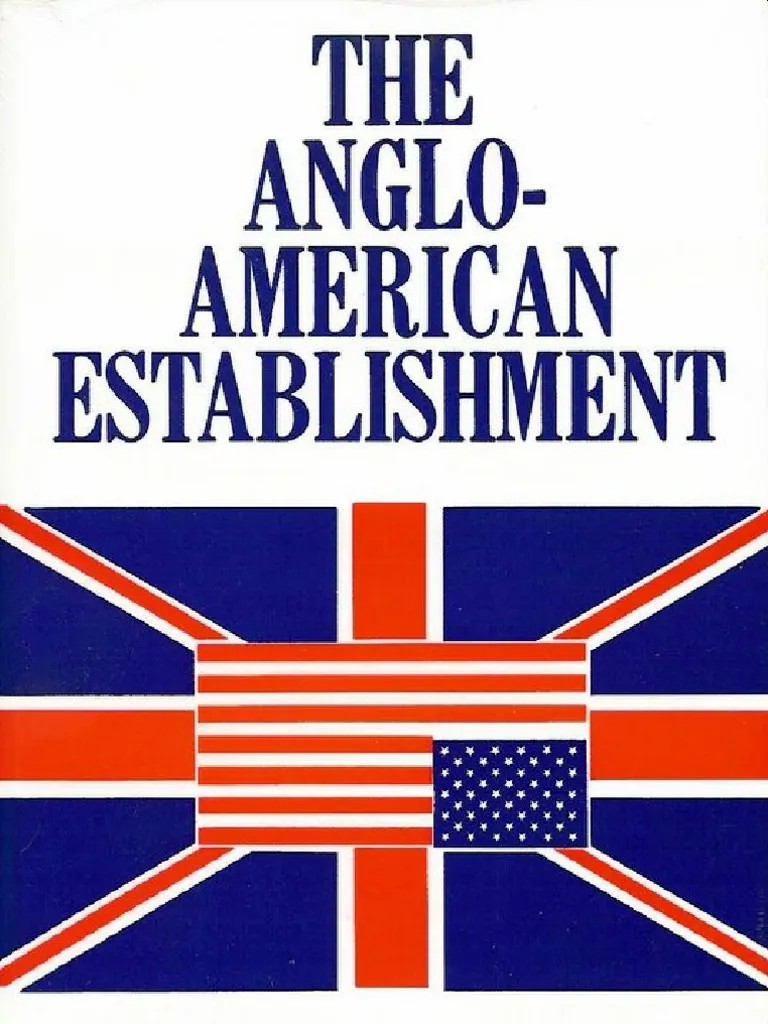
The Anglo-American Establishment From Rhodes To Cliveden
Carroll Quigley (Books in Focus, New York 1981)
This, I think, is the most important book ever written about the British ruling class and its foreign policy. In outline Quigley has rewritten the political and diplomatic history of Britain (and thus some of the world) from 1900-1939.
In his introduction the publisher tells us that Quigley had finished the book in 1949 but could not find a publisher for it. No surprise. His earlier work, Tragedy and Hope (Macmillan, US, 1966), was almost totally ignored by the academic press (1), and seems to have had the habit of ‘disappearing’ from the shelves of those few libraries in the US which did bother to stock it.(2) For writing it, or rather, for writing certain sections of it, Quigley was ostracised by the academic community and found his lecturing contracts drying up. When the journalist Robert Eringer went to see Quigley just before his death, Quigley warned him off the subject of Tragedy and Hope, saying it would get him (Eringer) into trouble. (3) After Quigley’s death there was a (not wholly) reliable report that his papers had been stolen. (4)
The sections of Tragedy and Hope which caused Quigley’s problems were essentially, though not entirely, a precis of this earlier work. Baldly, Quigley claims that an organisation, variously titled the Rhodes Milner Group, the Round Table, and just the Milner Group, had virtual control over British foreign policy for much of the first half of this century. The inner core of the group (which I will refer to as the Round Table), a secret society set up by Cecil Rhodes, using Rhodes’ money, set up the Round Table groups in the then British Dominions, the Council on Foreign Relations in the US, the network of Royal Institutes of International Affairs, and the various Institutes of Pacific Relations; controlled the Times and the Observer, All Souls in Oxford and the Rhodes Scholarship program; was largely responsible for the destruction of the League of Nations and the appeasement policies of the 1930s; converted the British Empire into the Commonwealth; and so on.
These “gracious and cultivated men of somewhat limited social experience constantly thought in terms of Anglo-American solidarity, of political partition and federation…were convinced that they could gracefully civilise the Boers of South Africa, the Irish, the Arabs and the Hindus …and were largely responsible for the partition of Ireland, Palestine and India, and for the federations of South Africa, Central Africa and the West Indies.” (5) And so on and so on. The full list is far too long to give here.
As claims about the existence of such secret organisations are usually the trademark of the right-wing loony, it is perhaps worth giving Quigley’s CV at this point. Educated at Harvard and Princeton, he taught at the School of Foreign Service, the Brookings Institute and the Foreign Service Institute of the State Department. (6) A more impeccable group of American ruling class institutions is hard to imagine.
But even with Quigley’s immaculate intellectual credentials his claims raise obvious difficulties. How do we check them? A secret society is, by definition, secret. And Quigley’s books tantalise. Assertion follows assertion but the supporting evidence is patchy: surprisingly, for an academic, Quigley provides fairly scanty documentation. In part this seems to be just a consequence of the nature of the material he is attempting to handle: in part you sense that Quigley is deliberately revealing only part of what he knows – creating a mystery while (apparently) solving one. It’s as if he is saying: ‘Look, I’ll lift the corner of this rug and..there: Did you see it?’
My fairly casual attempts to check some of his claims have neither falsified them nor confirmed them in any real sense: I just don’t have the research resources to do so. But if you consider his thesis about a ramified Round Table network merely as an hypothesis and then read some of the conventional accounts of the period, his version of events is suddenly visible everywhere. My reaction was: Christ, how has no-one seen any of this before?
It’s not that the Round Table people have been unknown. The names Quigley gives – e.g. in the inner group: Rhodes, Rothschild, William Stead, Viscount Esher, Milner, Abe Bailey, Earl Grey, H.A.L.Fisher, Jan Smuts, Leopold Amery, the Astors – are well known. The Round Table group are conventionally viewed as a group of enthusiastic imperialists who had a period of some visibility and influence in the 1910-1920 period. Their journal, The Round Table, was well known between the wars, and is in many university libraries.(It continued until the mid 1970s.)
Ellinwood, Rowse, Fry, Nimmocks, Watt, Kendle, Butler, Madden and Fieldhouse, Astor, and Toynbee, to give a selection of those who have written about the Round Table people, offer accounts of the period which are, more or less, consonant with Quigley’s thesis.(7) Toynbee, for example, attributes the Royal Institute of International Affairs to the Round Table people, and Butler, himself part of the group, on Quigley’s account, acknowledges that the so-called ‘Cliveden Set’ of the 1930s were, as Quigley claims, merely the Round Table at one of their regular meeting places.
Kendle, although he dismisses Quigley’s thesis without an explanation, is of particular interest: he, at least, has read Tragedy and Hope. No other historian of the period seems to have done so. (8)
The one group of people who took Quigley to heart were the ‘radical right’ in America, for whom Tragedy and Hope became a kind of bible. Here was the proof, the academically respectable proof, of the great conspiracy. It may not have been quite the conspiracy they had in mind, but it was a conspiracy none the less. But apart from them, the only people who seem to have taken Quigley on board have been Shoup and Minter, and the splendid Carl Oglesby.(9) (And Shoup and Minter are only interested in the Round Table as the parent body of the Council on Foreign Relations.)
But Flint, for example, in his recent biography of Rhodes, gives a good deal of room to an account of the size and possible influence of the Rhodes Scholar network.(10) He writes of “the excessive number of Rhodes Scholars in the Kennedy administration.” (11), and of the Rhodes Scholars forming a “recognizable elite in Canada.” (12)
Apparently unaware of Quigley, Flint notes that “in each of the white settled Commonwealth countries, South Africa and the United States, a similar, if less influential elite had emerged…and since 1948 India, Pakistan and Ceylon may be experiencing a similar development..Rhodes Scholars created links between American, British and Commonwealth ‘establishments’… and they have played a role in creating the ‘special relationship’ which existed between the US, Britain and the dominions after 1945.” (13).
In a sense, Quigley’s work is merely the history of how that fairly singular event (and others) came about.
There have been some odd moments in the history of this vast Anglophile network. Rudolph Hess flew to Britain in 1941 with a list of people he should try and see to arrange a peace. Top of the list was a group containing Lord Home (Lord Dunglass as was then) and the Duke of Hamilton. But second on the list was the Round Table (named as such). (14) Haushoffer, the German intellectual and mentor of Hitler, who prepared the list, evidently had a better understanding of the actual nature of Britain’s ruling elites than did Claud Cockburn, who, despite having worked at the Times, one of the key elements in the group, spent the latter half of the 1930s belabouring ‘the Cliveden Set’ without ever realising that they were the Round Table.
The ‘radical right’ in America attacked the Round Table’s various front organisations in the late 1940s, thinking they were attacking the ‘international communist conspiracy’. (15) More recently both Nixon and Mrs Thatcher have explicitly set themselves up as the enemies of the foreign policy ‘establishment’ without ever showing the slightest signs of understanding who it is they are hostile to. (16)
Quigley’s account comes to a halt after WW2. The Round Table group was one manifestation of the power of the British Empire, and as that disintegrated after the war, to be replaced by the new American economic empire, so the Round Table network’s influence waned.
The Rhodes Scholar network is still there (17), and the Council on Foreign Relations (some of whose members in turn spawned the Trilateral Commission) is still pretty much the single dominant force in the formation of American foreign policy. But the idea that the CFR is still at the behest of some central British group is ludicrous. (18) The Royal Institute of International Affairs is still going strong in this country but some of its standing as an ‘unofficial foreign office’ has declined with the rise of other foreign policy think tanks.
The journal Round Table folded in the mid 1970s, and the last sighting of the Round Table as an organisation I have seen is a reference to it in the early 1970s. (19) One or two of the people who were on the board of the Round Table journal are now in the present cabinet, but how significant this is I am unable to work out.
Quigley’s thesis presents the old problems raised by the existence of all such elite groups: how to decide whether any particular policy outcome advocated by such groups was in fact the result of their advocacy. Most of the time Quigley claims, convincingly infers, and suggests, rather than actually proving the causal connections. But while I think he may overstate the extent to which the network was ever centrally controlled, and he certainly understates the financial background to the group’s apparently disinterested advocacy of its philosophy, his thesis is generally convincing. Throughout this essay I have been unable to write as though Quigley’s thesis were merely provisional: in practice I accept it as proved, even though such ‘proof’ is essentially lacking. In the end all I could say was: it fits.
In a sense what Quigley describes as the Round Table’s conspiracy is merely the traditional behaviour of the British ruling class – only systematised slightly. Instinctively secretive, screened from public scrutiny by its control of the mass media, and from academic investigation by its control of the universities, in a sense the British ruling class is the most successful ‘conspiracy’ ever seen. What Quigley has done is to provide us with the most substantial key yet with which to unlock the details of its history.
Notes
-
1.It seems to have attracted only two, tiny, dismissive reviews. See Virginia Qrt. Review, Spring 1966, and Annals of the American Academy of Political and Social Science, November 1966.
2. See the comments of the editor of Lords of the Realm, issue 2, p. 16.
3. Eringer’s account is in his The Global Manipulators (Pentacle Books, Bristol, 1980).
4. Mentioned in a late 1970s issue of the US mag. Conspiracy Digest, which I seem to have lent and lost. If anyone can supply the reference I would be grateful.
5. Tragedy and Hope (p. 954)
6. Quigley’s entry in Who’s Who In America, 1966 through 1977.
7. D.C. Ellinwood Jnr., ‘The Round Table Movement and India 1909-20’ in Journal of Commonwealth Political Studies, November 1971
* A.L. Rowse, All Souls and Appeasement (Macmillan, London, 1961)
* M.G. Fry, Illusions of Security (University of Toronto, 1972)
* W. B. Nimmocks, ‘Lord Milner’s Kindergarten and the Origins of the Round Table’ in South Atlantic Quarterly, Autumn 1964.
* D.C.Watt, Personalities and Policies (Longmans, London, 1965).
* J. Kendle, The Round Table Movement and Imperial Union (University of Toronto, 1975)
* J.R.M. Butler, Lord Lothian (Macmillan, London, 1960).
* F. Madden and D.K. Fieldhouse (eds) Oxford and the Idea of the Commonwealth (Croom Helm, London, 1982)
* David Astor, Tribal Feeling (John Murray, London, 1964).
* Arnold Toynbee Acquaintances (Oxford University Press, 1967)
8. Kendle (above) p. 305 – the last paragraph of his book.
9. Carl Oglesby, The Yankee and Cowboy War (US 1976 and 77)
Laurence Shoup and William Minter, Imperial Brain Trust (Monthly Review Press, London and New York, 1977).
10. John Flint, Cecil Rhodes (Hutchinson, London, 1976)
11. Six in the State Dept, and at least 12 in the upper reaches of the administration. See Arthur Schlesinger A Thousand Days (London, 1975) p.181. JFK’s father, Joseph, was close to the Round Table people while US Ambassador to London in the 1930s.
12. Flint provides a list, circa 1973, beginning with the Governor General, three cabinet ministers, head of the armed forces, most of the permanent officials in the civil service etc etc. (Flint, above, pp. 244/5)
13. Flint, p. 245
14. Eugene Bird, Rudolph Hess in Spandau (London, 1974) p. 27
15. Quigley describes this episode with some patrician amusement in Tragedy and Hope.
16. Nixon, of course, as a long time member of the CFR was in a fairly paradoxical position.
17. They had a great reunion recently in Oxford, attended by HRH. See Time July 11th 1983. (Time currently has six Rhodes Scholars working on it.)
18. Ludicrous but still believed by the curious U.S. Labor Party – the conspiracy theorists’ conspiracy theorists.
19. Cecil King, Diaries (London, 1975) p. 52<
(RR)
Postscript
The title, Anglo-American Establishment, is a complete con. There is almost nothing about the US end of the network in this volume. The American publisher presumably thought he could sell copies to the US conspiracy buffs with that title. Anyone interested in the American end should read Tragedy and Hope.