
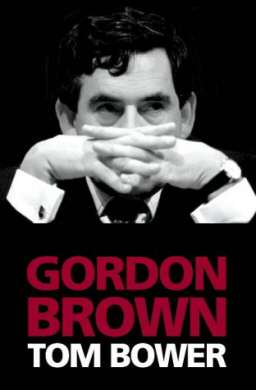
Tom Bower
London: HarperCollins, 2004, £20, h/b
I heard Bower interviewed on Radio 4. He said that he had begun this book as something of an admirer of Brown but had changed his mind while writing it. Change his mind he certainly did: this is a serious assault on the man. Although there is little which is new in this tale of egos, rows, sulking, press character assassination, shunning, and internecine struggle between two gangs, Brown’s and Blair’s, it useful to be reminded of the centrality of Geoffrey Robinson’s money which funded John Smith’s office; provided a flat in London for Brown to use; funded McCauley Hobsbawm, the PR agency of Brown’s wife; and bought the New Statesman, saving it from being absorbed by the Blair gang.
On pp. 69/70 he tells us that Brown met Bill Clinton at Baden-Baden in Germany. From the context this is 1989. (Bower is vague on the details.) I think this is wrong. Brown met Clinton when both attended the Bilderberg meeting at Baden-Baden in 1991. At that meeting Brown and Clinton were both young politicians, possibly the next President of the US and a future British political leader just the kind of people the Bilderbergers would want to have a look at. Labour leader John Smith was then on Bilderberg’s steering committee and brought Brown in. For Smith to play this role there had to be more to him than the picture we have been offered of him and is offered by Bower. The Bilderberg connection is missing here. Did Bower omit it? Or is he simply still unaware of this?
On p. 342 Bower offers this summary of Brown’s policy in recent years.
‘Instead of the government accumulating debt to stimulate the economy, he would encourage an explosion of personal debt through cheap loans secured against rising house prices, and accumulate over £120 billion of PFI and rail debt off the government’s balance sheet; and to keep unemployment down, he would use taxes to increases the numbers employed by the state’.
This is part of what has happened (or is one way of describing what has happened). But was this a deliberate policy? Did Brown ‘encourage’ the personal debt explosion? Or is it simply an (unintended) consequence of the economic beliefs he holds? I think the latter. And where is the massive trade deficit and the continuing shrinkage of manufacturing by an exchange rate which has been too high since Brown became Chancellor? Bower doesn’t seem to know much about British economic history something he shares with his subject and the economic sections of the book are inadequate.
After 200 interviews Bower cannot decide if Brown is a labourist disguised as a neo-liberal or a politician who, like Harold Wilson in the famous Private Eye cartoon, faces both ways at once: to his party and the unions he comes on as a lefty, the inheritor of the Labour Party tradition; to the world dominated by American power and economic thinking, he is a follower of the Washington consensus. In my view he is both those things and more. He followed the lead set by the John Smith-Marjorie Mowlam ‘prawn cocktail offensive’, which saw them touring the City and promising not to regulate or tax it; he surrendered the last major economic lever to the City: control of interest rates went to the Bank of England. Thus we have had higher interest rates than the US and the EU ever since and the British manufacturing sector in GDP terms, at least three times the size of the City has been steadily shrinking under an overvalued currency.
Second, Brown copied the Clinton government’s policy of subsidising the wages of the low-paid. (A book is waiting to be written which details how the Blair-led Labour opposition and government copied the Clinton people in many fields.)
Brown does appear to genuinely believe that ‘the Washington consensus’ is the best way forward for the world. In this he is also following the Clintonistas for they, too, were true, born-again, economic liberals and globalisers. ([15]) In Paul Krugman’s book, mentioned above, on page 252, Krugman also a true believer and friend of the Clintonistas applauds the Clinton regime’s
‘considerable idealism when it came to economic policy….. willing to take major political risks in order to do what it thinks is right for the country as far as international economic policy was concerned….the Clintonites really, truly believe they were doing the right thing.’
I dare say Gordon Brown does, too. But as it took him nearly a decade to persuade himself that the neo-liberal model was correct, how long will it take him to admit he got it wrong?
Note
[15] March saw one million jobs lost in British manufacturing since Brown became Chancellor. <http://www.theherald.co.uk/business/35369.html> David Smith, one of The Times economics correspondents, commented on his blog: ‘Here is an interesting trivia question. Were more manufacturing jobs lost under John Major or Tony Blair? The answer is Blair: one million in under eight years, compared with just over 500,000 in Major’s six-and-a-half years at No10.’ <www.economicsuk.com/blog/> Some of this is, no doubt, the result of global events but some is the result of Brown giving interest rates to the Bank of England.